Why Study in Cyprus? Top Reasons for International Students
Choosing the right country for your higher education is one of the most important decisions in your study abroad journey. Students today want more than just a degree. They want quality education, affordable tuition, international exposure, a safe lifestyle, career development, and a clear path from admission to visa preparation.
For many international students, Cyprus has become an attractive study destination. Located in the Mediterranean, Cyprus offers a unique combination of European education, English-taught programmes, warm weather, multicultural student life, and practical study options.
Whether you are planning to study business, hospitality, computer science, medicine, engineering, tourism, health sciences, or social sciences, Cyprus offers a growing range of opportunities for students from around the world.
In this guide, we explain the top reasons why international students choose to study in Cyprus and how Uni Navigators can help you with university admission, document preparation, visa guidance, and pre-departure support.
1. A Growing Higher Education Destination in Europe
Cyprus has invested strongly in higher education and is positioning itself as a regional education and research hub. The Cyprus Department of Higher Education states that the country’s higher education system includes public universities, private universities, public institutions of tertiary education, and private institutions of tertiary education. It also notes that Cyprus follows the European Higher Education Area framework through the Bologna Process.
For international students, this means Cyprus can offer European-style education, structured degree pathways, and a wide range of academic options.
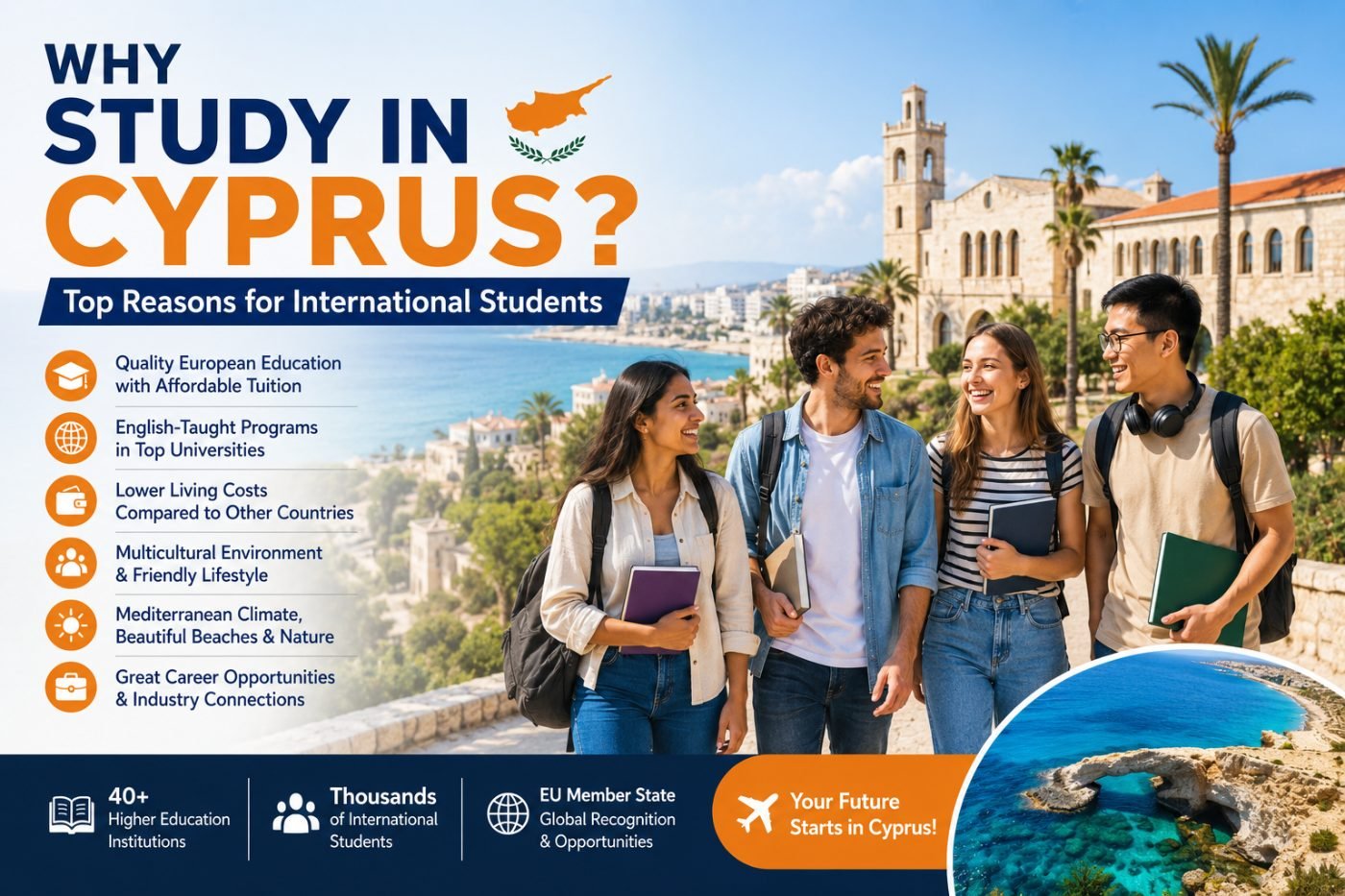
The official Study in Cyprus portal also highlights that Cyprus has public and private universities, plus more than 40 higher education institutions, attracting thousands of international students each year.
2. English-Taught Programmes
One of the biggest reasons students choose Cyprus is the availability of English-taught courses. Many universities in Cyprus offer undergraduate and postgraduate programmes in English, especially in popular fields such as business, medicine, computer science, engineering, hospitality, tourism, and social sciences.
This makes Cyprus a practical option for students who want to study in Europe but may not speak Greek. Studying in English can also help students improve their academic writing, presentation skills, and professional communication.
For students planning an international career, this can be a major advantage.
3. Affordable Tuition Compared with Many Other Study Destinations
Cost is one of the biggest concerns for international students and their families. Compared with countries such as the UK, USA, Canada, and Australia, Cyprus can often be a more affordable study destination.
Tuition fees vary depending on the university, course, and level of study. According to Prospects, master’s tuition fees in Cyprus are generally lower than in the UK, with public institutions often cheaper than private institutions. It gives a general guide of around €5,000 to €10,000 per year for master’s students, while doctoral degrees can cost up to around €12,000.
Students should always check the exact fee directly with their chosen university because fees can change by course, intake, and scholarship availability.
4. Lower Living Costs Than Many Major Study Abroad Destinations
In addition to tuition, students must consider accommodation, food, transport, books, health insurance, and personal expenses.
Cyprus is often seen as more budget-friendly than many larger Western European study destinations. Student life can be manageable with careful planning, especially for students who choose shared accommodation, use public transport, and budget their monthly spending wisely.
Costs will depend on the city, lifestyle, and accommodation type. Nicosia, Limassol, Larnaca, and Paphos may all offer different living cost experiences.
5. Multicultural Student Environment
Cyprus attracts students from Europe, Asia, Africa, the Middle East, and other regions. This creates a diverse and welcoming student environment where international students can meet people from different cultures, languages, and backgrounds.
A multicultural environment helps students build confidence, improve communication skills, and develop a global mindset. These skills are valuable not only during university life but also in future careers.
For many students, studying in Cyprus is their first experience living abroad. A friendly international student community can make the adjustment easier.
6. Mediterranean Lifestyle and Warm Climate
Cyprus is known for its Mediterranean climate, sunshine, beaches, historical sites, and relaxed lifestyle. The official Study in Cyprus portal describes studying in Cyprus as both an academic experience and a living experience, highlighting its safe environment, year-round sunshine, natural beauty, and rich historical and cultural landscape.
For students who prefer a warmer climate and outdoor lifestyle, Cyprus can be a very attractive choice.
Outside the classroom, students can explore beaches, mountains, cultural festivals, historic towns, restaurants, and local markets. This creates a balanced study abroad experience where students can focus on education while also enjoying a healthy lifestyle.
7. Wide Range of Courses
Cyprus offers programmes across many academic areas. Popular fields for international students include:
Business and management
Computer science
Artificial intelligence and data science
Hospitality and tourism
Medicine and health sciences
Engineering
Law
Accounting and finance
Psychology
International relations
Education
Architecture
Pharmacy
Nursing
Social sciences
When choosing a course, students should not only focus on popularity. The best course should match your academic background, career goals, budget, and long-term plans.
At Uni Navigators, we help students compare course content, tuition fees, entry requirements, career outcomes, and visa considerations before applying.
8. Suitable Pathways for Different Academic Backgrounds
Not every student enters directly into a bachelor’s or master’s degree. Some students may need a foundation programme, English preparation, diploma route, pre-master’s pathway, or other academic preparation before starting their main degree.
Cyprus can be a good option for students who need flexible entry routes. Many institutions assess students based on academic history, English level, programme requirements, and previous qualifications.
Before applying, students should check whether they meet the admission requirements for their chosen course. The Cyprus Department of Higher Education states that students seeking admission to private universities or private institutions of tertiary education must usually have a secondary school leaving certificate or equivalent qualification, along with any additional requirements listed by the institution.
9. Opportunity to Study in a European Union Country
The Republic of Cyprus is a member of the European Union. For many students, this adds value because they can experience European education, culture, systems, and lifestyle while studying in a Mediterranean environment.
Study.eu notes that Cyprus is an EU member country and that many programmes are offered fully in English.
Students should always confirm the accreditation and recognition of their chosen university and course before applying. This is especially important if they plan to work internationally, pursue further study, or apply for professional registration after graduation.
10. Safe and Student-Friendly Environment
Safety is an important factor when choosing a study destination. Many international students and parents consider Cyprus appealing because of its relatively calm lifestyle, smaller cities, and student-friendly environment.
Universities often provide support services for international students, including orientation, academic support, accommodation advice, student societies, and guidance for settling in.
A safe and supportive environment can help students focus better on their studies and personal development.
11. Good Location Between Europe, Asia, and the Middle East
Cyprus has a strategic location in the eastern Mediterranean. It is well connected to Europe, the Middle East, and nearby regions through international airports in cities such as Larnaca and Paphos.
This location can be convenient for students who want a European study experience while staying relatively close to home, depending on their country of origin.
It can also offer exposure to different cultures, business environments, and travel opportunities.
12. Career-Focused Learning
Many universities in Cyprus offer practical and career-focused education. Depending on the course, students may benefit from projects, internships, industry links, workshops, laboratory work, case studies, research assignments, and professional development activities.
Fields such as tourism, hospitality, business, health sciences, and technology can be especially attractive because Cyprus has active industries connected to these areas.
Students who want to build employability skills should check whether their chosen programme includes internships, practical training, career services, or employer networking opportunities.
13. Part-Time Work Possibilities for Eligible Students
Many international students are interested in whether they can work during their studies. Rules depend on nationality, visa type, course status, and local regulations.
Prospects states that non-EU students may be permitted to work during their stay in Cyprus if they study full-time and obtain a work permit. It also notes that eligible students may work up to 20 hours per week during term time and up to 38 hours during holidays, subject to the correct process and approval.
Because work rules can change, students should always confirm the latest rules with their university, the Cyprus authorities, or a qualified adviser before starting employment.
14. Student Visa and Residence Permit Route
Non-EU students usually need the correct entry permit, student visa, or residence permission to study in Cyprus.
The Cyprus Department of Higher Education states that students from third countries must obtain an entry permit from the Civil Registry and Migration Department to enter Cyprus, and must apply for a residence permit within 10 days of arriving in Cyprus.
Common student visa documents may include:
Valid passport
University admission letter
Academic documents
Proof of funds
Medical certificates, if required
Police clearance or good conduct certificate
Passport-size photographs
Proof of accommodation
Visa application forms
Tuition fee payment evidence
Health insurance, if required
Students should always check the latest requirements with the Cyprus diplomatic mission in their country and their chosen university before applying.
15. Scholarships and Financial Support
Some universities in Cyprus offer scholarships, tuition discounts, or financial support based on academic merit, nationality, programme choice, or other criteria.
Prospects notes that government-funded scholarships may be available for international postgraduates with strong academic performance, and some universities may support foreign postgraduate students through scholarships and assistantships.
Scholarships are usually competitive, so students should apply early and prepare strong academic documents, personal statements, references, and application forms.
16. A Balanced Study Abroad Experience
Cyprus offers a balance of education, lifestyle, affordability, safety, and cultural experience. It may be a good choice for students who want a European study destination but prefer a smaller, warmer, and more relaxed environment than some larger countries.
Students can enjoy academic growth while also experiencing Mediterranean culture, food, history, and student life.
This balance is one of the reasons Cyprus is becoming more popular among international students.
Things to Consider Before Studying in Cyprus
Cyprus can be a great option, but it is important to make an informed decision. Before applying, students should consider:
University accreditation
Course recognition
Tuition fees
Living costs
Scholarship options
English language requirements
Visa requirements
Residence permit process
Accommodation availability
Part-time work rules
Career plans after graduation
Recognition of the degree in your home country
Students should also be careful when choosing institutions. Always confirm whether the university is officially recognised and whether the course meets your future academic or professional goals.
Who Should Consider Studying in Cyprus?
Cyprus may be a good choice if you:
Want to study in a European destination
Prefer English-taught programmes
Are looking for affordable tuition options
Want a multicultural student environment
Prefer a warm Mediterranean climate
Want career-focused courses
Are interested in business, hospitality, technology, health sciences, or tourism
Need a smaller and more student-friendly study destination
Want expert support with admission and visa preparation
If you are comparing Cyprus with the UK, Canada, Australia, Europe, or the USA, professional counselling can help you choose the best destination for your profile.
How Uni Navigators Can Help You Study in Cyprus
Applying to study in Cyprus involves several important steps. You need to choose the right university, select a suitable course, prepare documents, meet admission requirements, understand tuition fees, arrange financial evidence, and follow the visa process carefully.
Uni Navigators can support you with:
University and course selection
Admission guidance
Application preparation
Document checking
Personal statement support
Student visa guidance
Financial document guidance
Accommodation and travel advice
Pre-departure support
One-to-one student counselling
Our team helps students from around the world apply to universities in Cyprus, the UK, Europe, USA, Canada, Australia, and other study destinations.
Final Thoughts: Is Cyprus a Good Choice for International Students?
Cyprus is a strong option for students who want a European-style education, English-taught courses, affordable study options, Mediterranean lifestyle, and a multicultural environment.
The best choice depends on your academic background, budget, career goals, visa eligibility, and preferred lifestyle. Before applying, take time to compare universities, check course recognition, understand visa requirements, and prepare your documents carefully.
With the right guidance, your study abroad journey can become clearer, easier, and more successful.
Ready to study in Cyprus? Contact Uni Navigators today and take the first step toward your international education journey.