
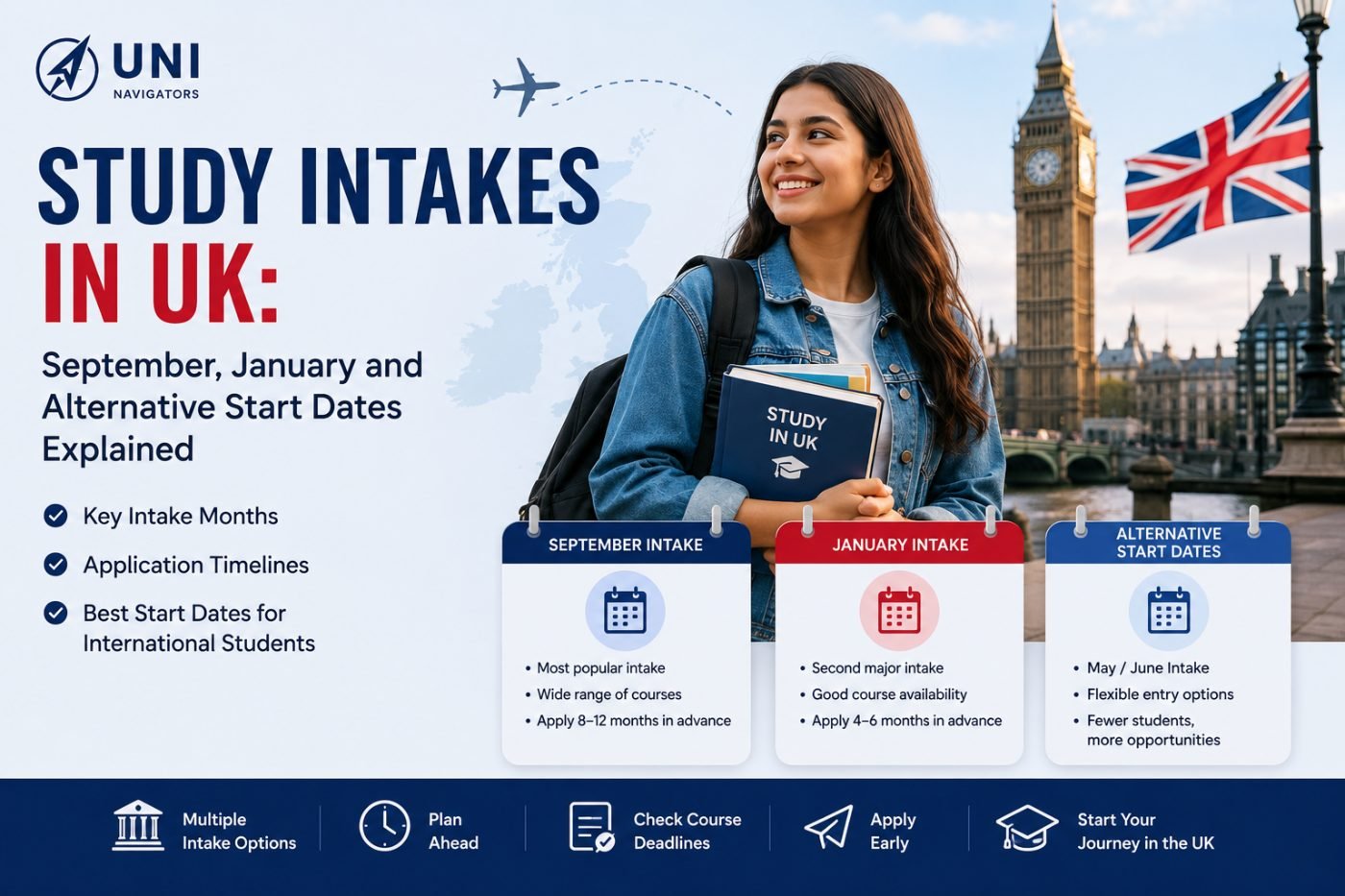
Study Intakes in UK: September, January and Alternative Start Dates Explained
The United Kingdom remains one of the world’s leading study destinations for international students. Every year, thousands of students apply to UK universities for undergraduate, postgraduate, MBA, and pathway programmes.
One important part of planning your study abroad journey is understanding the different UK university intakes. Unlike many countries that offer only one annual intake, UK universities often provide multiple entry points throughout the year.
Choosing the right intake can affect:
- Course availability
- Scholarship opportunities
- Visa timelines
- Accommodation options
- Career planning
- University choices
In this guide, we explain the major UK study intakes, including the September, January, and alternative start dates, along with application timelines and tips for international students.
What Are UK University Intakes?
A university intake refers to the period when students begin their academic programmes.
Most UK universities offer three major intakes:
| Intake | Common Start Period | Availability |
|---|---|---|
| September / October Intake | Autumn | Highest |
| January / February Intake | Winter | Moderate |
| May / June Intake | Summer | Limited |
The September intake is the largest and most popular, while January and May intakes are available for selected programmes and universities.
September Intake in UK
The September or October intake is the main academic intake in the UK and is preferred by most international students.
It offers the widest range of:
- Undergraduate courses
- Postgraduate programmes
- Scholarships
- Accommodation options
- Internship opportunities
More than 90% of UK university programmes are generally available during the September intake.
Advantages of September Intake
1. Largest Course Availability
Students have access to the highest number of programmes and universities.
Popular courses include:
- Business and Management
- Engineering
- Computer Science
- Medicine
- Law
- Artificial Intelligence
- Finance
2. More Scholarship Opportunities
Many universities and organisations offer major scholarships during the September intake because it is the primary admission cycle.
3. Better Student Experience
September intake students usually experience:
- Full orientation programmes
- Fresher events
- Student society recruitment
- Campus networking activities
4. Internship and Career Opportunities
Many internships and graduate recruitment cycles align with the September academic calendar.
September Intake Application Timeline
Students should begin preparations early.
| Timeline | Activity |
|---|---|
| September – December (Previous Year) | Research universities and courses |
| October – January | Submit applications |
| January – April | Receive offers and accept admission |
| April – June | Apply for CAS and visa |
| August – September | Travel to the UK |
For many undergraduate programmes through UCAS, the equal consideration deadline is usually around mid-January.
January Intake in UK
The January or February intake is the second most popular intake in the UK.
It is ideal for students who:
- Missed September deadlines
- Need more preparation time
- Are waiting for exam results
- Need additional financial planning time
The January intake offers moderate course availability compared to September.
Advantages of January Intake
1. Flexible Alternative Start Date
Students who cannot apply in time for September can avoid waiting a full year.
2. Less Competition
Some universities may have lower competition levels during January admissions.
3. Additional Preparation Time
Students have more time for:
- English language tests
- Financial arrangements
- Visa preparation
- Academic documentation
4. Suitable for Selected Postgraduate Courses
Many UK universities offer postgraduate and MBA programmes during January intake.
Limitations of January Intake
Students should also understand the limitations.
Common Limitations Include
- Fewer course options
- Limited scholarship availability
- Reduced accommodation choices
- Smaller campus intake size
Some undergraduate courses may not be available during January intake.
January Intake Application Timeline
| Timeline | Activity |
|---|---|
| June – September | Research and applications |
| September – November | Offer letters and admissions |
| November – December | CAS and visa process |
| January – February | Begin studies in the UK |
May or Alternative Intakes in UK
Some UK universities also offer May, June, or alternative intakes for selected programmes.
These intakes are smaller and mainly available for:
- MBA programmes
- Business courses
- Short-term programmes
- Pathway and foundation courses
- Selected postgraduate degrees
The May intake is less common and usually has limited university options.
Advantages of May Intake
1. Faster Admission Opportunities
Students can start studies earlier instead of waiting for the next major intake.
2. Smaller Class Sizes
Smaller intake groups may offer more personalised academic attention.
3. Less Crowded Application Process
Visa and admission processing may sometimes be smoother during less busy intake periods.
Limitations of May Intake
Students should consider that May intake usually has:
- Very limited course availability
- Fewer university options
- Reduced scholarship opportunities
- Limited accommodation choices
It is mainly suitable for students with flexible course preferences.
Which Intake Is Best for International Students?
The best intake depends on each student’s personal situation, academic goals, and preparation timeline.
September Intake Is Best For:
- Maximum university choices
- Undergraduate students
- Scholarship seekers
- Students wanting full campus experience
January Intake Is Best For:
- Students needing more preparation time
- Applicants who missed September deadlines
- Selected postgraduate students
May Intake Is Best For:
- Flexible applicants
- Selected postgraduate programmes
- Students wanting faster admission opportunities
Important Factors to Consider Before Choosing an Intake
1. Course Availability
Not all courses are available in every intake.
Students should verify:
- Programme availability
- University options
- Intake-specific requirements
2. Scholarship Opportunities
The September intake generally offers the highest number of scholarships.
Students applying for funding should check scholarship deadlines carefully.
3. Visa Processing Time
Students should allow sufficient time for:
- CAS issuance
- Financial documentation
- Student visa applications
4. Accommodation Availability
Student accommodation becomes more competitive during major intakes.
Applying early improves accommodation options.
5. Career and Internship Timing
Students interested in internships and graduate placements may benefit from the September intake because recruitment cycles often align with the main academic year.
Common Mistakes Students Should Avoid
International students should avoid:
- Applying too late
- Ignoring visa timelines
- Choosing an intake without checking course availability
- Missing scholarship deadlines
- Waiting until the last moment for accommodation
Early planning significantly improves admission success.
Tips for Choosing the Right UK Intake
1. Start Research Early
Students should begin researching universities and intakes at least 8–12 months before their preferred start date.
2. Check University Websites Carefully
Intake availability may vary between universities and programmes.
3. Consider Academic and Financial Readiness
Students should choose an intake that allows enough preparation time for:
- Exams
- Documents
- Financial planning
- Visa applications
4. Seek Professional Guidance
Education advisors can help students choose the most suitable intake based on:
- Academic background
- Career goals
- Budget
- Visa timelines
Final Thoughts
Understanding UK university intakes is an important step for international students planning to study abroad. The September intake remains the most popular option because of wider course availability, scholarships, and student opportunities, while January and May intakes provide flexible alternatives for students needing additional preparation time.
Choosing the right intake can improve your admission experience, visa preparation, and overall academic journey in the UK.
At Uni Navigators, we help students worldwide secure admissions to leading universities in the UK, Europe, Canada, the USA, Australia, and other top destinations. From university selection and applications to student visa guidance and scholarship support, our experienced team assists students throughout every stage of their international education journey.
Start your study abroad journey today with Uni Navigators.