Living Costs in UK for International Students: Rent, Food, Transport and Budget Tips
The United Kingdom is one of the world's most popular study destinations, attracting hundreds of thousands of international students every year. While UK universities offer world-class education and excellent career opportunities, it is equally important for students to understand the cost of living before starting their studies.
Living expenses can vary significantly depending on the city, lifestyle, accommodation choice, and spending habits. Proper financial planning helps students manage their budget effectively and avoid unnecessary stress during their studies.
This guide explores the average living costs in the UK for international students, covering accommodation, food, transport, utilities, entertainment, and practical money-saving tips.
Why Understanding Living Costs Is Important
Before applying to a UK university, students should calculate both tuition fees and living expenses.
Understanding your budget helps you:
- Plan your finances realistically
- Meet student visa financial requirements
- Avoid unexpected expenses
- Reduce financial stress
- Focus more effectively on your studies
Many students underestimate living costs, especially when moving to major cities such as London.
Average Monthly Living Costs in the UK
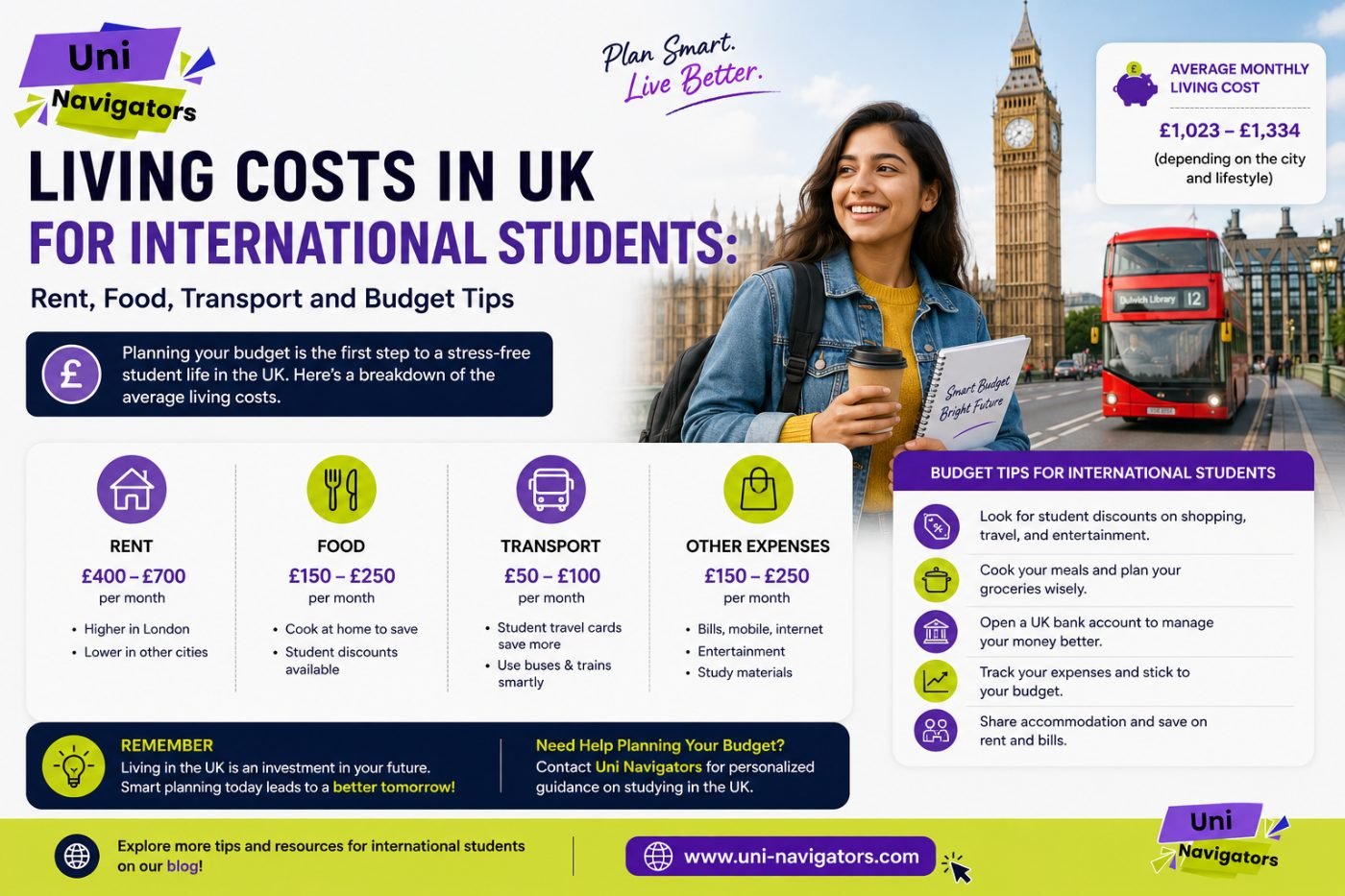
The average monthly living cost for international students typically ranges between:
| Location | Average Monthly Cost |
|---|---|
| London | £1,300 – £1,800 |
| Outside London | £800 – £1,300 |
Actual expenses depend on personal lifestyle choices and accommodation arrangements.
Accommodation Costs in the UK
Accommodation is usually the largest expense for international students.
The amount you spend depends on:
- City
- Accommodation type
- Location
- Facilities included
University Halls of Residence
University accommodation is often the preferred choice for first-year international students.
Average Cost
| Accommodation Type | Monthly Cost |
|---|---|
| University Halls | £500 – £1,200 |
Benefits include:
- Utilities often included
- Close proximity to campus
- Easier social integration
- Enhanced security
Private Student Accommodation
Private student residences are available in most university cities.
Average Cost
| Accommodation Type | Monthly Cost |
|---|---|
| Private Student Housing | £600 – £1,400 |
These properties often provide:
- Modern facilities
- Study spaces
- Gym access
- Social areas
Shared Accommodation
Many students reduce costs by sharing houses or apartments.
Average Cost
| Accommodation Type | Monthly Cost |
|---|---|
| Shared Housing | £400 – £900 |
Sharing accommodation can significantly reduce living expenses.
Food and Grocery Costs
Food costs vary depending on eating habits and location.
Students who cook regularly usually spend less than those who eat out frequently.
Average Monthly Food Budget
| Category | Monthly Cost |
|---|---|
| Groceries | £150 – £300 |
| Eating Out | £50 – £200 |
Typical Grocery Expenses
Students commonly purchase:
- Bread
- Rice
- Pasta
- Fruits
- Vegetables
- Milk
- Eggs
- Meat and poultry
Shopping at budget supermarkets can help reduce food costs considerably.
Transportation Costs
The UK has an extensive public transport network, making it easy for students to travel.
Student Transport Costs
Average Monthly Cost
| Transport Type | Monthly Cost |
|---|---|
| Bus Pass | £40 – £80 |
| Train Travel | £50 – £150 |
| London Travel Card | £100 – £180 |
Students can often receive discounts through student travel schemes.
Student Travel Discounts
Popular discount options include:
- 16–25 Railcard
- Student Oyster Card (London)
- University transport discounts
These discounts can help students save hundreds of pounds annually.
Utility Bills and Internet
Utility costs depend on whether they are included in accommodation fees.
Average Monthly Costs
| Utility Type | Monthly Cost |
|---|---|
| Electricity and Gas | £40 – £100 |
| Water | £20 – £40 |
| Internet | £20 – £40 |
Many university accommodations include utilities within the rent.
Mobile Phone Costs
Students can choose from various mobile phone plans.
Average Monthly Cost
| Service | Monthly Cost |
|---|---|
| SIM-Only Plan | £10 – £25 |
| Contract Plan | £20 – £50 |
Many providers offer student-friendly packages.
Study Materials and Academic Expenses
Depending on the course, students may need to budget for:
- Books
- Printing
- Laboratory equipment
- Software subscriptions
Average Monthly Cost
£20 – £80
Many universities provide free access to digital resources and library materials.
Entertainment and Social Activities
Student life in the UK offers plenty of opportunities for recreation and socialising.
Average Monthly Cost
| Activity | Monthly Cost |
|---|---|
| Cinema and Events | £20 – £60 |
| Gym Membership | £15 – £50 |
| Social Activities | £50 – £150 |
These costs vary according to individual lifestyle preferences.
Healthcare Costs
International students studying in the UK usually pay the Immigration Health Surcharge (IHS) as part of their visa application.
This provides access to many National Health Service (NHS) services during their stay.
Students should still budget for:
- Prescriptions
- Dental treatment
- Optical care
where applicable.
Average Monthly Student Budget
Outside London
| Expense Category | Monthly Cost |
|---|---|
| Accommodation | £500 – £800 |
| Food | £150 – £250 |
| Transport | £40 – £80 |
| Utilities | £50 – £100 |
| Personal Expenses | £100 – £200 |
| Total | £800 – £1,300 |
London
| Expense Category | Monthly Cost |
|---|---|
| Accommodation | £800 – £1,400 |
| Food | £200 – £350 |
| Transport | £100 – £180 |
| Utilities | £50 – £120 |
| Personal Expenses | £150 – £300 |
| Total | £1,300 – £1,800+ |
Most Affordable UK Student Cities
Several UK cities offer a lower cost of living compared to London.
Popular affordable student cities include:
- Manchester
- Sheffield
- Leicester
- Nottingham
- Coventry
- Liverpool
- Newcastle
- Cardiff
These cities often provide excellent universities alongside lower accommodation costs.
Budgeting Tips for International Students
Managing your finances effectively can make a significant difference during your studies.
1. Create a Monthly Budget
Track:
- Income
- Expenses
- Savings
- Emergency funds
Budgeting apps can help students monitor spending habits.
2. Choose Student Accommodation Carefully
Compare:
- Rent prices
- Utility costs
- Distance from campus
- Transport expenses
The cheapest rent is not always the most cost-effective option.
3. Cook at Home
Preparing meals at home is often far more affordable than eating out regularly.
Students who cook frequently can save hundreds of pounds each year.
4. Take Advantage of Student Discounts
Many businesses offer student discounts on:
- Travel
- Clothing
- Technology
- Restaurants
- Entertainment
Always carry your student ID card.
5. Buy Second-Hand Textbooks
Students can reduce academic expenses by purchasing:
- Used textbooks
- Digital editions
- Library copies
Many universities also provide free learning resources.
6. Use Public Transport Wisely
Student travel cards and rail discounts can significantly reduce transportation costs.
Walking or cycling may also help save money while improving fitness.
7. Work Part-Time
Many international students work part-time while studying.
Part-time employment can help cover:
- Food expenses
- Transport costs
- Personal spending
Students should always comply with visa work restrictions.
Common Financial Mistakes Students Should Avoid
Many students face budgeting challenges because of avoidable mistakes.
Common issues include:
- Underestimating accommodation costs
- Spending excessively during the first few months
- Not tracking expenses
- Ignoring emergency savings
- Relying entirely on credit cards
Financial discipline helps create a more comfortable student experience.
Final Thoughts
The UK offers international students an exceptional educational experience, but careful financial planning is essential. Understanding accommodation costs, food expenses, transport fees, and everyday spending can help students create a realistic budget and enjoy a more comfortable lifestyle during their studies.
While living costs vary across different cities, students who budget wisely, take advantage of discounts, and manage expenses carefully can successfully balance their finances while enjoying everything the UK has to offer.
At Uni Navigators, we help students worldwide secure admissions to leading universities in the UK, Europe, Canada, the USA, Australia, and other top study destinations. From university applications and student visas to accommodation guidance and financial planning support, our experienced team assists students throughout every stage of their study abroad journey.
Start your UK study abroad journey today with Uni Navigators.