Living Costs in New Zealand for International Students: Rent, Food, Transport and Budget Tips
New Zealand is one of the world's most popular destinations for international students, offering high-quality education, a welcoming environment, and excellent career opportunities. However, before starting your academic journey, it is important to understand the cost of living and create a realistic budget.
While tuition fees vary by university and programme, living expenses can significantly impact your overall study budget. Accommodation, food, transportation, utilities, and personal expenses should all be carefully considered when planning your move.
This guide provides a detailed breakdown of living costs in New Zealand for international students and practical tips to help you save money.
How Much Does It Cost to Live in New Zealand as a Student?
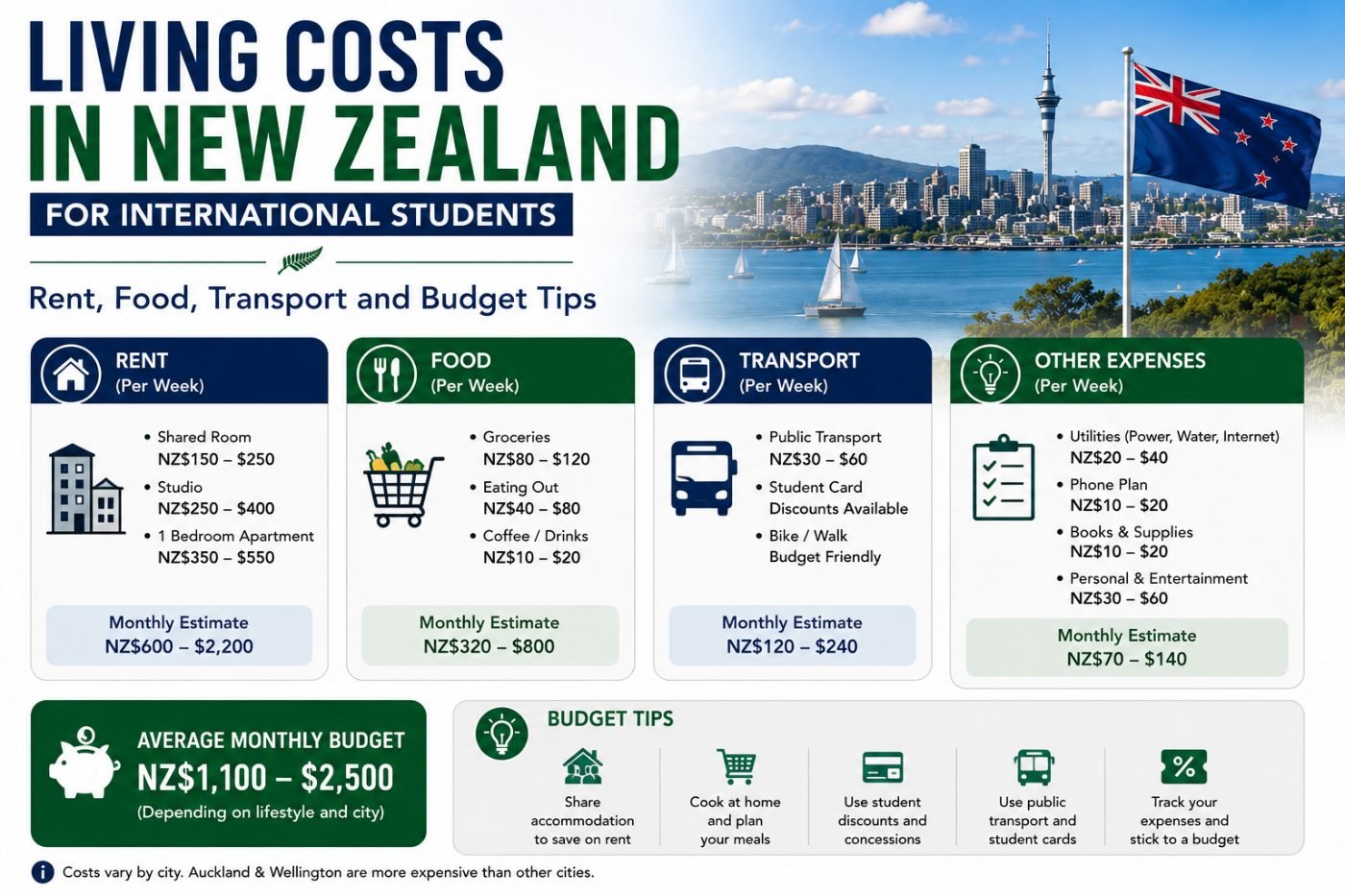
The average international student typically spends between NZD 1,300 and NZD 2,400 per month, depending on the city, accommodation type, and lifestyle choices. Students living in larger cities such as Auckland and Wellington generally face higher expenses than those studying in smaller student-friendly cities such as Hamilton or Dunedin.
Accommodation usually represents the largest portion of a student's monthly budget, followed by food, transportation, and personal expenses.
Accommodation Costs in New Zealand
Finding suitable accommodation is one of the most important decisions for international students.
1. Shared Student Flats
Shared accommodation is the most affordable option for many students.
Typical costs:
| Accommodation Type | Monthly Cost (NZD) |
|---|---|
| Shared Flat | 600 – 1,200 |
| Private Room in Shared House | 700 – 1,400 |
| Studio Apartment | 1,200 – 2,400 |
Costs vary depending on location, distance from campus, and property quality. Auckland and Wellington generally have the highest rental prices.
2. University Halls of Residence
Many first-year international students choose university-managed accommodation.
Benefits include:
- Fully furnished rooms
- Utilities often included
- Strong student community
- Easy access to campus facilities
Typical costs range from NZD 860 to NZD 1,900 per month depending on whether meals are included.
3. Homestay Accommodation
Living with a local family can be an excellent cultural experience.
Average cost:
- Around NZD 1,200 per month
- Meals are often included
This option can be particularly helpful for students adjusting to life in New Zealand.
Food and Grocery Expenses
Food costs depend largely on your eating habits.
Students who cook most of their meals at home generally spend between NZD 320 and NZD 600 per month on groceries. Eating out frequently can increase expenses considerably.
Average Food Costs
| Item | Approximate Cost (NZD) |
|---|---|
| Monthly Groceries | 320 – 600 |
| Meal at Budget Restaurant | 15 – 30 |
| Coffee | 4 – 6 |
| Fast Food Meal | 12 – 18 |
Cooking at home remains one of the most effective ways to reduce monthly expenses.
Transportation Costs
New Zealand offers reliable public transportation systems in major cities.
Students commonly use:
- Buses
- Trains
- Ferries
- Cycling
- Walking
Monthly public transport expenses typically range from NZD 120 to NZD 200 depending on the city and travel frequency. Many local transport providers offer discounted student fares.
Typical Transport Costs
| Transport Type | Cost |
|---|---|
| Monthly Public Transport Pass | NZD 120 – 200 |
| Bus or Train Journey | NZD 4 – 12 |
| Ferry Ride | NZD 5 – 70 |
| Bicycle Rental | NZD 1 – 2 per hour |
Students who live close to campus can significantly reduce transport costs by walking or cycling.
Utility and Internet Costs
If utilities are not included in your rent, you should budget for:
- Electricity
- Water
- Internet
- Mobile phone plans
Typical monthly costs:
| Expense | Monthly Cost (NZD) |
|---|---|
| Utilities | 50 – 120 |
| Internet | 20 – 50 |
| Mobile Plan | 15 – 40 |
Students sharing accommodation can split these costs among housemates. Community discussions from student forums also suggest shared living arrangements substantially reduce utility expenses.
City-Wise Living Costs
Your location has a major impact on your budget.
Auckland
New Zealand's largest city offers excellent universities and employment opportunities but is generally the most expensive student destination.
Estimated monthly living costs:
- NZD 1,620 – 2,400 per month
- Rent alone: NZD 880 – 1,200 per month
Wellington
The capital city provides a vibrant student atmosphere and strong graduate employment prospects.
Estimated monthly living costs:
- NZD 1,580 – 2,140 per month
Christchurch
Often more affordable than Auckland and Wellington while still offering excellent educational opportunities.
Estimated monthly living costs:
- NZD 1,380 – 1,960 per month
Hamilton and Dunedin
Popular among budget-conscious students.
Estimated monthly living costs:
- NZD 1,320 – 1,900 per month
These cities generally offer lower rent and transportation costs.
Sample Monthly Student Budget
Here is a realistic budget for an international student living in shared accommodation:
| Expense Category | Estimated Monthly Cost (NZD) |
|---|---|
| Rent | 800 |
| Groceries | 400 |
| Transport | 150 |
| Utilities & Internet | 80 |
| Mobile Phone | 25 |
| Entertainment & Personal Expenses | 200 |
| Total | 1,655 NZD |
Actual expenses may vary depending on lifestyle and city of residence. Student discussions suggest budgets between NZD 1,500 and NZD 2,000 per month are common for students living modestly.
Budgeting Tips for International Students
Choose Shared Accommodation
Sharing a flat with other students can reduce rent and utility costs significantly.
Cook at Home
Preparing meals yourself is much cheaper than regularly eating at restaurants or ordering takeaway food.
Use Student Discounts
Many businesses, transport providers, cinemas, and retailers offer discounts for students.
Buy Second-Hand Items
Furniture, kitchen equipment, bicycles, and textbooks can often be purchased at lower prices through student marketplaces.
Use Public Transport
Student travel concessions can make buses and trains much more affordable than owning a car.
Track Your Spending
Budgeting apps and monthly expense tracking can help prevent overspending and identify savings opportunities.
Can International Students Work While Studying?
Yes. Most international students in New Zealand can work part-time during their studies, subject to visa conditions.
Part-time employment can help cover living expenses and provide valuable work experience. Common student jobs include:
- Retail Assistant
- Hospitality Staff
- Customer Service Representative
- Administrative Assistant
- Campus Ambassador
Income from part-time work can help offset accommodation, transport, and personal expenses.
How Uni Navigators Can Help
At Uni Navigators, we help students choose the right university, understand financial requirements, and prepare realistic study budgets before moving abroad.
Our experienced advisors provide support with:
- University admissions
- Student visa applications
- Accommodation guidance
- Scholarship opportunities
- Pre-departure planning
- Financial preparation
We help students make informed decisions so they can enjoy a successful and affordable study experience in New Zealand.
Final Thoughts
New Zealand offers an outstanding student experience, but understanding your living costs is essential for effective financial planning. Accommodation, food, and transportation will make up the majority of your monthly expenses, while smart budgeting can help you manage costs comfortably.
By choosing affordable housing, cooking at home, using student discounts, and planning your spending carefully, international students can enjoy a rewarding educational experience while keeping their finances under control. With the right preparation, studying in New Zealand can be both academically enriching and financially manageable.