Ireland University Application Deadlines: When International Students Should Apply
Ireland has become one of Europe's leading study destinations, attracting thousands of international students each year with its world-class universities, globally recognised qualifications, and excellent career opportunities.
One of the most important aspects of planning your study abroad journey is understanding university application deadlines. Applying early can significantly improve your chances of securing admission, obtaining scholarships, arranging accommodation, and completing the student visa process without unnecessary stress.
This guide explains the typical application deadlines for Irish universities and outlines when international students should begin preparing their applications.
Why Application Deadlines Matter
Many students underestimate the amount of time required to complete the university application process.
Applying early provides several advantages:
- Greater course availability
- More scholarship opportunities
- Sufficient visa processing time
- Better accommodation options
- Reduced application stress
- More time to prepare financial documents
Missing important deadlines can delay your plans by several months or even an entire academic year.
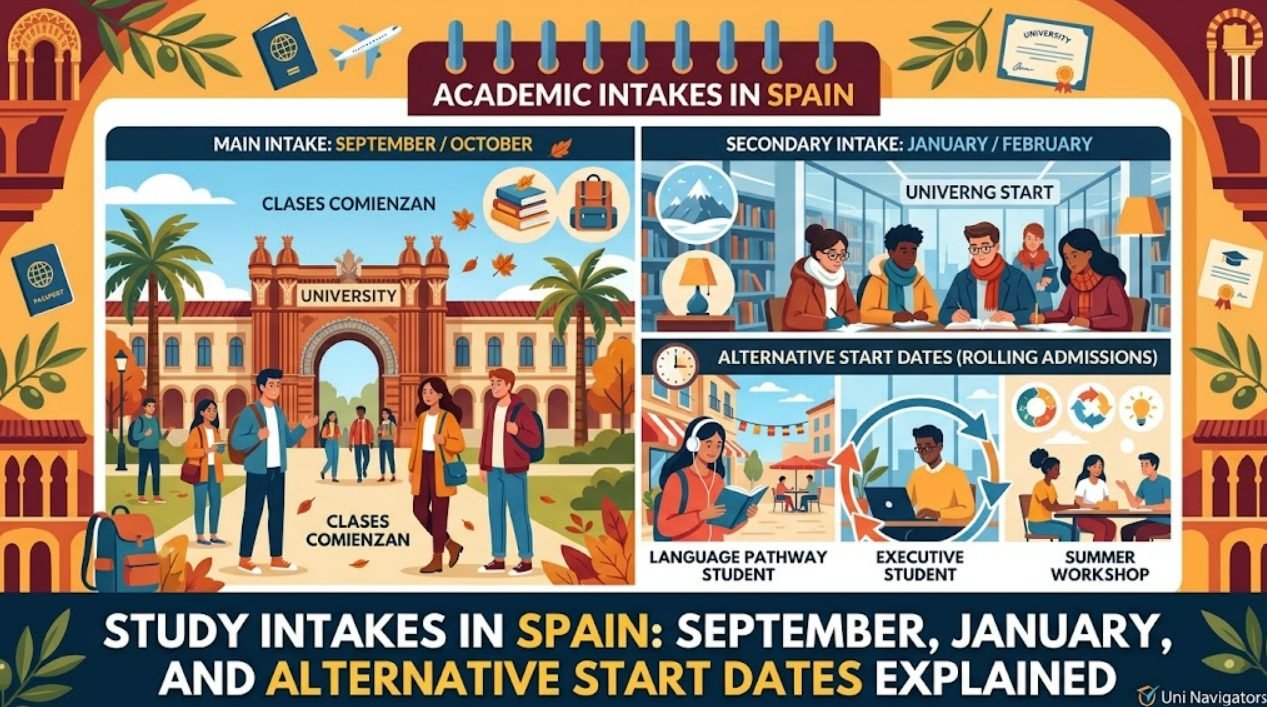
Main Intakes in Ireland
Irish universities generally offer two major intakes:
September Intake
The September intake is the primary intake and attracts the largest number of students.
Most undergraduate and postgraduate programmes begin during this period.
January Intake
The January intake serves as a secondary entry point for selected programmes.
Not all courses are available in January, so students should verify programme availability with their chosen institution.
September Intake Application Deadlines
The September intake is the most popular admission period for international students.
While deadlines vary between universities and programmes, students should ideally begin preparations 10–12 months before classes start.
Recommended Timeline
October – December (Previous Year)
- Research universities
- Compare courses
- Check tuition fees
- Review admission requirements
January – March
- Prepare academic documents
- Take English language tests
- Draft personal statements
- Obtain recommendation letters
February – May
- Submit university applications
- Apply for scholarships where available
Many competitive programmes may begin reviewing applications during this period.
May – July
- Receive admission decisions
- Accept offers
- Pay tuition deposits if required
June – August
- Apply for student visa
- Arrange accommodation
- Book flights
- Prepare for departure
September
- Travel to Ireland
- Attend orientation
- Begin studies
January Intake Application Deadlines
The January intake offers an alternative option for students who are unable to start in September.
Because fewer programmes are available, students should research options carefully.
Recommended Timeline
April – June
- Research universities
- Select programmes
- Review requirements
June – August
- Complete applications
- Submit supporting documents
August – October
- Receive offers
- Accept admission
- Arrange finances
October – December
- Apply for visa
- Secure accommodation
- Prepare for travel
January
- Arrive in Ireland
- Begin classes
How Early Should International Students Apply?
As a general rule, international students should aim to submit applications at least 6–9 months before their intended start date.
Early applications provide additional time for:
- Document verification
- Scholarship applications
- Visa processing
- Financial planning
- Accommodation arrangements
Students applying for highly competitive programmes should start even earlier.
Documents Needed Before Applying
Preparing documents early can help avoid last-minute delays.
Common application requirements include:
Academic Transcripts
Official records of previous qualifications and grades.
Certificates and Diplomas
Proof of completed academic studies.
English Language Test Results
Depending on the university, accepted qualifications may include:
- IELTS Academic
- PTE Academic
- TOEFL iBT
- Duolingo English Test
- Other approved qualifications
Personal Statement
A strong personal statement should explain:
- Academic background
- Career goals
- Reasons for choosing Ireland
- Reasons for selecting the programme
Letters of Recommendation
Universities may require references from:
- Teachers
- Professors
- Academic supervisors
- Employers
Passport Copy
A valid passport is required for both university admission and future visa applications.
Scholarship Deadlines Often Close Earlier
One common mistake international students make is focusing only on university deadlines.
Many scholarship applications close months before programme start dates.
Students interested in funding opportunities should:
- Research scholarships early
- Prepare scholarship essays
- Gather supporting documents in advance
- Monitor university scholarship deadlines regularly
Applying early increases access to available funding opportunities.
Competitive Programmes May Close Early
Certain programmes may reach capacity before official deadlines.
Popular areas of study include:
- Medicine
- Dentistry
- Pharmacy
- Computer Science
- Data Analytics
- Business
- Engineering
Submitting an early application can improve your chances of securing a place.
Common Reasons Students Miss Deadlines
Delaying English Language Tests
Students often underestimate the time required to prepare for and complete language examinations.
Book your test as early as possible.
Waiting for Final Academic Results
Some universities may accept applications with predicted grades or ongoing qualifications.
Students should not automatically delay applications.
Incomplete Documentation
Missing transcripts, references, or personal statements can slow the application process.
Prepare all documents well in advance.
Underestimating Visa Processing Times
Visa applications require careful preparation and supporting evidence.
Allow sufficient time after receiving your university offer.
Application Tips for International Students
Start Planning Early
Begin researching universities at least one year before your intended intake.
Apply to Multiple Universities
Submitting applications to several suitable universities can increase your chances of receiving offers.
Monitor University Websites
Admission requirements and deadlines may change from year to year.
Always verify information directly with your chosen institution.
Keep Digital Copies of Documents
Organise all application materials in one secure location.
This makes future visa and accommodation applications much easier.
Respond Quickly to University Requests
Universities may request additional documents or clarification during the admissions process.
Prompt responses can prevent unnecessary delays.
Sample Timeline for a September Intake Student
12 Months Before Intake
- Research courses and universities
10 Months Before Intake
- Prepare English language tests
8 Months Before Intake
- Gather academic documents
6–7 Months Before Intake
- Submit applications
4–5 Months Before Intake
- Receive offers and accept admission
3 Months Before Intake
- Apply for student visa
1–2 Months Before Intake
- Arrange accommodation and travel
Arrival Month
- Travel to Ireland and begin studies
Why Early Applications Lead to Better Outcomes
Students who apply early often benefit from:
- Greater course availability
- Increased scholarship opportunities
- More accommodation choices
- Reduced visa pressure
- Better financial planning
- Smoother transition to university life
Early preparation is one of the most effective ways to improve your overall study abroad experience.
Final Thoughts
Understanding Ireland university application deadlines is essential for international students planning to study abroad. While specific dates vary between universities and programmes, the most successful applicants typically begin preparing 8–12 months before their chosen intake.
By researching universities early, preparing documents in advance, meeting scholarship deadlines, and allowing sufficient time for visa processing, students can maximise their chances of securing admission and starting their studies without unnecessary stress.
At Uni Navigators, we help students worldwide navigate every stage of the admissions process. From university selection and application support to scholarships, student visas, accommodation, and pre-departure guidance, our experienced advisors are here to help you achieve your study abroad goals.
Contact Uni Navigators today and let us help you secure admission to a leading university in Ireland.