
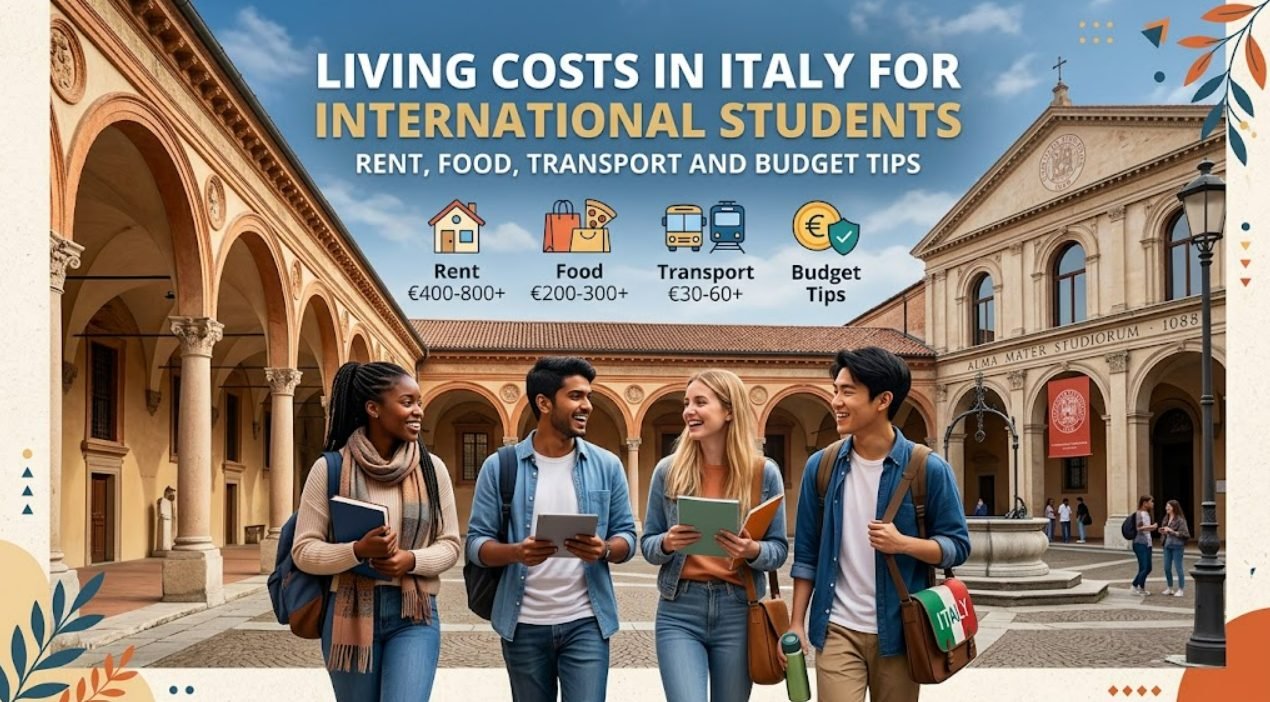
Living Costs in Italy for International Students: Rent, Food, Transport, and Practical Budget Tips
Italy remains one of Europe's top study-abroad destinations, pairing world-renowned public universities with a rich cultural landscape. While public university tuition fees in Italy are among the most affordable on the continent—often calculated according to family income via the ISEE system—day-to-day living costs vary dramatically depending on where you settle.
For most international students, an all-inclusive monthly budget ranges between €700 and €1,500. The city you choose is the single largest variable determining your overall expenditure.
Here is an honest, practical breakdown of accommodation, grocery, transport, and daily living costs across Italy, along with realistic advice to help you keep expenses under control.
1. Quick Overview: Average Monthly Student Budget
A standard monthly budget for an international student in Italy breaks down across key categories:
| Expense Category | Cheaper / Regional Cities (Padua, Pisa, Naples) | Mid-Tier Hubs (Turin, Bologna, Florence) | Major Metros (Milan, Rome) |
| Rent (Single room in shared flat) | €250 – €400 | €350 – €550 | €500 – €800 |
| Utilities & Internet (Bollette) | €40 – €70 | €50 – €90 | €60 – €110 |
| Groceries & Food | €140 – €200 | €160 – €240 | €200 – €300 |
| Public Transport | €20 – €28 | €25 – €35 | €22 – €38 |
| Mobile Plan (SIM) | €8 – €12 | €8 – €12 | €8 – €15 |
| Leisure & Personal Expenses | €70 – €120 | €80 – €150 | €100 – €180 |
| Total Estimated / Month | €528 – €830 | €673 – €1,077 | €890 – €1,443 |
2. Accommodation Costs (Alloggio)
Housing represents your largest monthly outgoing. Student housing in Italy typically falls into three categories:
A. Private Shared Flats (Stanza Singola / Stanza Doppia)
The most common choice for international students is renting a bedroom in a shared private apartment.
Single Room (Camera Singola): Expect to pay €300 to €500 per month in cities like Bologna, Padua, or Turin. In Milan or central Rome, prices climb to €550 to €850 per month.
Shared Double Room (Posto Letto in Doppia): Sharing a room with another student cuts housing costs down to €200 to €380 per month, even in larger cities.
B. University Residences (Studentati)
Public universities work alongside regional student support bodies (such as ER.GO in Emilia-Romagna, Adisu in Lazio, or EDISU in Piedmont) to offer subsidized dorm beds. These range from €200 to €400 per month, often with utilities included. Spaces are limited and allocated based on family income and merit, meaning early application is essential.
C. Utilities (Spese & Bollette)
Always verify whether rent includes condominium fees (spese condominiali), water, gas, electricity, and Wi-Fi. When billed separately, utilities generally add €50 to €100 per person per month, with winter heating bills being higher in northern regions.
3. Food and Grocery Expenses
Groceries in Italy are accessible, fresh, and budget-friendly when purchased from local markets and discount supermarkets.
Supermarket Shopping: Budget €150 to €250 per month if you prepare most meals at home. Supermarket chains such as Eurospin, Lidl, Conad, and Penny Market offer economical staples. Local open-air markets (mercati rionali) are ideal for buying seasonal fruit, vegetables, and cheeses at lower prices.
University Canteens (Mensa Universitaria): Subsidized campus cafeterias are a standout perk of Italian student life. A complete meal (first course, second course, side dish, bread, and drink) typically costs between €2 and €6, scaled according to your student financial assessment (ISEE).
Dining Out & Socializing:
Espresso at the bar counter (al banco): €1.10 – €1.50
Pizza margherita and a drink: €8 – €12
Student Aperitivo (buffet snacks with a drink): €7 – €12
4. Local Transport and Connectivity
Public Transportation
Most Italian university cities feature reliable networks of buses, trams, and metros. Students receive substantial discounts on monthly passes:
Milan (ATM): Around €22/month for students under 27.
Rome (ATAC): An annual student pass (Metrebus Card) costs approximately €130 to €150/year, or around €35/month.
Bologna, Turin, Padua: Monthly student passes run between €20 and €30.
Bicycle Sharing: Flat cities like Bologna, Padua, and Florence have robust cycling infrastructures, with student bike-share memberships costing €15 to €35 per year.
Mobile Data and Internet
Italy has some of the most competitive mobile data rates in Europe. Operators like Iliad, ho. Mobile, and Fastweb offer monthly packages with 100GB to 200GB of 5G data plus unlimited calls for €8 to €12 per month.
5. Additional Mandatory Costs to Factor In
When preparing your pre-arrival finances, account for these essential non-rent expenses:
Permit of Stay (Permesso di Soggiorno): Non-EU students must apply within 8 days of arriving. The application kit, revenue stamp (marca da bollo), and postal fees total roughly €110 to €140.
National Health Insurance (SSN): Registering with Italy’s National Health Service (Servizio Sanitario Nazionale) provides non-EU students with full medical care, hospital access, and a designated family doctor (medico di base) for a flat yearly student fee of around €700. Private student policies are also available at lower rates (around €120 to €150/year) for basic visa compliance.
Rental Deposit (Caparra): Landlords typically request 2 to 3 months' rent upfront as a refundable security deposit. Keep this liquid before arriving.
6. Practical Ways to Save Money While Studying in Italy
Apply for Regional DSU Scholarships: Regional scholarships offer non-repayable grants, tuition waivers, and free or subsidized accommodation/meals based on family economic status (ISEE Parificato).
Get an ESN Card: The Erasmus Student Network (ESN) card provides discounts on regional travel, Ryanair baggage allowances, hostels, and local student events.
Make the Mensa Your Primary Lunch Spot: Eating at the university cafeteria on weekdays can halve your monthly dining budget.
Part-Time Work Rights: Non-EU students on an Italian student visa can legally work up to 20 hours per week (capped at 1,040 hours per year), which helps cover daily discretionary spending.
Turn Your Study in Italy Plans Into Reality
Navigating university applications, entry exams, visa paperwork, and student accommodation can feel daunting. At Uni Navigators, our education advisors work with students across the globe to secure university admissions and handle visa requirements across Italy and Europe.
Ready to explore your options? Get in touch with the Uni Navigators team today for a free consultation.