How to Find a Remote Job in Europe, USA, Canada, Australia or New Zealand from Anywhere
Learn how international students, graduates and skilled professionals can find remote jobs in Europe, the USA, Canada, Australia and New Zealand while working from home anywhere in the world.
WORK
4/27/20268 min read
How to Find a Remote Job in Europe, USA, Canada, Australia or New Zealand While Working from Home
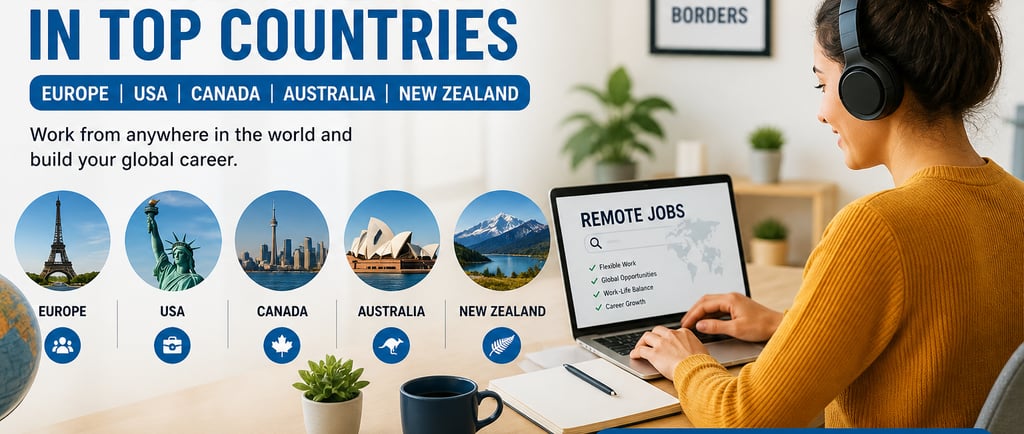
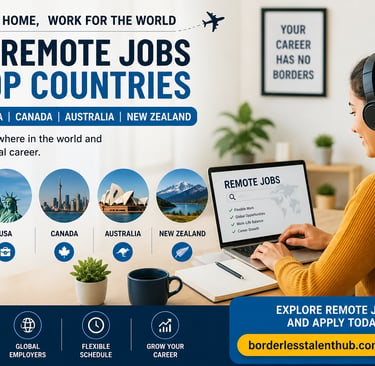
Remote work has changed the way students, graduates and skilled professionals build international careers. Today, it is possible to work for companies in Europe, the USA, Canada, Australia or New Zealand without moving abroad immediately. For many international students and recent graduates, remote jobs are also a practical way to gain global experience, earn in stronger currencies and build a career profile that can support future study, skilled migration or work visa plans.
However, finding a genuine remote job is not as simple as searching “work from home jobs” online. International employers usually look for candidates who can communicate well, work independently, manage time zones and bring job-ready skills. This guide explains how to find remote jobs worldwide and how to position yourself as a strong global candidate.
Why Remote Jobs Are a Great Opportunity for International Students and Graduates
Remote jobs are especially useful for students, graduates and early-career professionals who want international exposure but may not yet be ready to relocate. A remote role can help you build experience with overseas companies, understand global workplace culture and improve your employability.
For students planning further education abroad, remote work experience can strengthen your CV and personal statement. For graduates aiming for skilled migration, remote work can help you develop practical experience in fields such as IT, digital marketing, business analysis, customer support, finance, design, project coordination, education technology and administration.
Remote work is now common across many global industries, but international work arrangements can involve tax, payroll, social security and employment compliance. The OECD has updated its tax guidance to reflect the rise of cross-border remote work, including when home-based work may create tax considerations for businesses. This means serious employers will usually want to understand where you are based and whether they can legally hire you as an employee, contractor or through an Employer of Record.
Best Remote Job Markets to Target
Europe
Europe is a strong remote job market for candidates with skills in technology, customer success, sales, finance, language support, operations, recruitment and digital marketing. Many European companies hire international remote workers, especially if the job does not require local licensing or in-person attendance.
The best opportunities are usually found in countries with large international business hubs, such as Germany, the Netherlands, Ireland, Sweden, France, Spain and the Nordic region. English-speaking roles are available, but additional European languages can give candidates a major advantage.
Students and graduates with UK, EU or international education backgrounds can often stand out by showing strong communication, multicultural awareness and the ability to work with clients across different time zones.
USA
The USA remains one of the largest remote job markets in the world. American companies frequently hire remote talent in software development, data analytics, sales, marketing, virtual assistance, customer support, product management, design, content writing and online education.
Competition is high, but the market is also huge. To succeed, candidates need a clear professional profile, a strong LinkedIn presence, measurable achievements and confidence in online interviews.
For US-based remote roles, pay attention to whether the job is open worldwide or only available to candidates based in specific US states. Some companies advertise remote jobs but restrict hiring because of payroll, tax or employment law requirements.
Canada
Canada is another attractive market for remote job seekers, particularly in technology, finance, administration, customer service, healthcare support, education services and project coordination. Canadian employers often value international experience, good communication and practical skills.
Many remote jobs in Canada may still require candidates to work during Canadian business hours. If you are working from Asia, Africa or the Middle East, you must be realistic about time zone differences before applying.
Canada is also popular among international students, so remote experience with Canadian employers can be valuable for candidates who later plan to study or migrate there.
Australia
Australia offers remote opportunities in digital marketing, IT, accounting support, customer service, recruitment, healthcare administration, education support, operations and business services. Australian employers often value practical experience, professionalism and reliable communication.
Time zone compatibility can be a challenge for some candidates, but it can also be an advantage for applicants based in Asia or nearby regions. If you can work Australian business hours, mention this clearly in your CV or cover letter.
Australia also has a strong international education sector, so students with experience in admissions, student support, content, counselling, marketing or CRM tools may find relevant remote roles.
New Zealand
New Zealand has a smaller job market than the USA, Canada or Australia, but it offers opportunities in technology, tourism support, online education, administration, design, digital services and customer experience.
New Zealand has also introduced visitor visa conditions allowing visitors to work remotely for an overseas employer or client, which reflects the country’s interest in digital nomads and global remote work. For job seekers outside New Zealand, the key is to target companies that openly hire international remote workers and to show flexibility with working hours.
Which Remote Jobs Are Best for International Candidates?
Not every job can be done remotely from another country. The best remote roles are usually digital, skill-based and easy to measure. Popular options include:
IT and software roles such as web development, app development, cybersecurity, cloud support, QA testing and data analysis.
Digital marketing roles such as SEO, paid ads, social media management, content writing, email marketing and marketing automation.
Business and operations roles such as virtual assistant, project coordinator, operations assistant, business analyst and CRM administrator.
Customer support roles such as live chat support, technical support, client onboarding and customer success assistant.
Creative roles such as graphic design, UI/UX design, video editing, copywriting and brand content creation.
Education-related roles such as online tutoring, admissions support, student recruitment, academic counselling and e-learning coordination.
The strongest candidates are not those who apply for every remote job. They are the ones who choose a clear skill area and build a profile around it.
How to Prepare Your Profile for Remote Jobs
Before applying, make sure your professional profile looks international and remote-ready.
Your CV should be clean, direct and achievement-focused. Instead of only listing responsibilities, show results. For example, write “managed 40+ student enquiries per day using CRM software” or “improved social media engagement by 35% in three months.”
Your LinkedIn profile should match your CV. Use a professional headline such as “Digital Marketing Assistant | SEO & Content | Open to Remote Roles” or “Customer Support Specialist | International Student Services | Remote Work Ready.”
A portfolio can make a major difference. This does not have to be complicated. A Google Drive folder, personal website, Notion page or PDF portfolio can show examples of your work, such as writing samples, design work, dashboards, campaigns, reports or case studies.
For remote jobs, employers also want evidence that you can work independently. Highlight tools such as Slack, Zoom, Microsoft Teams, Google Workspace, Notion, Trello, Asana, HubSpot, Salesforce, Canva, WordPress, Shopify, Excel, Power BI or any industry-specific software you have used.
Where to Apply for Remote Jobs
Remote job seekers should use a mix of job boards, company career pages and professional networking.
Start with international job boards that clearly advertise remote roles. Look for filters such as “remote worldwide,” “work from anywhere,” “EMEA remote,” “US remote,” “Canada remote,” “Australia remote” or “contract remote.”
LinkedIn is also one of the best platforms for remote job hunting. Use search terms such as:
Remote customer support worldwide
Remote marketing assistant Europe
Remote data analyst Canada
Remote virtual assistant USA
Remote admissions officer Australia
Remote software developer New Zealand
Work from anywhere jobs
Always read the job description carefully. Some roles say “remote” but are only open to people living in a specific country. Others are open globally but require overlap with a certain time zone.
If you are actively looking for international remote job opportunities, you can also register your interest through Borderless Talent Hub, where job seekers can apply and explore remote career opportunities with global employers.
How to Avoid Remote Job Scams
Because remote jobs are popular, scams are also common. Be careful with any company that promises guaranteed employment, asks you to pay money for a job offer, avoids video interviews or uses unofficial email addresses.
A genuine employer will usually have a company website, business email, clear job description, interview process and written contract. They should explain whether you are being hired as an employee, contractor or freelancer.
Never share sensitive documents too early. Passport copies, bank details and identity documents should only be provided when you are confident the employer is legitimate and you have received proper onboarding instructions.
Employee, Contractor or Freelancer: Know the Difference
International remote jobs are often offered in three ways.
An employee role usually means the company officially employs you and manages payroll, benefits and taxes according to the relevant rules. This can be difficult across borders unless the company has a local entity or uses an Employer of Record.
A contractor role means you provide services independently and usually invoice the company. You may be responsible for your own taxes, insurance and local compliance.
A freelance role is usually project-based or hourly. It can be a good starting point, but income may not be stable at first.
In Europe, cross-border telework can also affect social security rules, especially when an employee lives in one country and works remotely for an employer in another. European guidance has addressed telework and social security coordination for cross-border workers. This is why job seekers should be honest about their location and working arrangement from the beginning.
How to Write a Strong Remote Job Application
A strong remote job application should be short, focused and tailored. Do not send the same CV and cover letter to every employer.
In your application, mention:
The role you are applying for
Your most relevant experience
The tools you can use
Your time zone and availability
Your ability to work independently
Your communication skills
Any international study or work experience
For example:
“I am based in Pakistan and available to work UK and Europe business hours. I have experience in student support, CRM management and email communication, and I am confident working remotely with international teams.”
This type of sentence immediately answers questions that global employers often have.
Skills That Help You Get Hired Faster
Remote employers are looking for more than technical ability. They want people who are reliable, clear and easy to work with.
The most valuable remote work skills include written communication, time management, problem-solving, self-discipline, attention to detail and confidence using digital tools.
For international students and graduates, English communication is especially important. You do not need a perfect accent, but you should be able to write professional emails, join video calls and explain your ideas clearly.
If you are applying for roles in Europe, Canada, Australia, New Zealand or the USA, make sure your CV style matches international expectations. Keep it simple, avoid unnecessary personal details and focus on skills, results and experience.
How Remote Work Can Support Future Study and Migration Plans
Remote work can be a powerful step in your international education journey. If you are planning to study abroad, remote experience can show universities that you are career-focused and professionally mature.
If you are planning to apply for skilled migration in the future, remote work can help you build relevant experience, improve your professional confidence and strengthen your career direction.
For example, a student planning to study business analytics in Canada can benefit from remote experience in data reporting or CRM analysis. A student aiming for digital marketing in Australia can build a portfolio through remote content or SEO work. A graduate interested in technology jobs in Europe can gain experience with international software teams before relocating.
Remote work is not just about earning from home. It can become part of a long-term global career strategy.
Final Thoughts
Finding a remote job in Europe, the USA, Canada, Australia or New Zealand is possible, but it requires preparation, patience and a professional approach. The strongest candidates are those who understand their skills, apply to the right roles, communicate clearly and show that they can work independently across borders.
Start by choosing one or two job categories that match your background. Improve your CV, update your LinkedIn profile, build a small portfolio and apply consistently. Be honest about your location, time zone and work availability.
Remote work can open doors to global employers, international experience and future study or migration opportunities. With the right strategy, working from home can become the first step towards a truly borderless career.
To explore remote job opportunities and register your interest, visit Borderless Talent Hub
Comprehensive support for your study abroad journey.
Contact US
SUBSCRIBE TO OUR NEWSLETTER
E-mail: info@uni-navigators.com
UK +44 758 758 7581
Uni Navigators © 2025. All rights reserved.
Ireland +353 899 55 0400
Pakistan +92 313 492 8423
KSA +966 51 001 5232
Argentina +54 9 351 637 5179