Personal Statement Tips for UK Universities: What International Students Should Include
A personal statement is one of the most important parts of a UK university application. While academic grades, qualifications, and test scores demonstrate your academic ability, a personal statement allows universities to understand who you are, why you want to study a particular subject, and what makes you a strong candidate.
For international students, a well-written personal statement can be the difference between receiving an offer and being overlooked in a competitive admissions process.
Whether you are applying for an undergraduate degree, postgraduate programme, foundation course, or pathway programme, understanding what universities are looking for can help you create a personal statement that leaves a positive impression.
This guide explains what international students should include in a UK university personal statement, common mistakes to avoid, and practical tips for writing an effective application.
What Is a Personal Statement?
A personal statement is a written document submitted as part of a university application.
It gives admissions tutors an opportunity to learn more about:
- Your academic interests
- Career aspirations
- Motivation for studying the course
- Relevant experiences and achievements
- Personal qualities and skills
Unlike transcripts and certificates, a personal statement allows you to explain your story in your own words.
Why Is a Personal Statement Important?
UK universities receive thousands of applications every year.
Many applicants have similar academic qualifications, so admissions teams often use personal statements to assess:
- Commitment to the subject
- Academic potential
- Communication skills
- Critical thinking ability
- Motivation and enthusiasm
A strong personal statement can strengthen an application and help distinguish you from other candidates.
What UK Universities Want to See
Admissions tutors are generally looking for students who demonstrate:
- Genuine interest in the subject
- Academic readiness
- Relevant experience
- Clear career goals
- Independent thinking
- Strong communication skills
The most successful personal statements are focused, authentic, and relevant to the chosen course.
1. Explain Why You Chose the Course
One of the first questions admissions officers ask is:
"Why does this student want to study this subject?"
Start by explaining your motivation for choosing the course.
Discuss:
- What interests you about the subject
- How your interest developed
- Why you want to study it at university level
- What aspects of the subject excite you most
Avoid generic statements that could apply to any applicant.
Example
Instead of writing:
"I have always liked business and want to study it."
Write something more specific:
"My interest in business developed through observing how digital marketing strategies influence consumer behaviour and contribute to organisational growth."
Specific examples demonstrate genuine interest.
2. Demonstrate Academic Interest
Universities want evidence that you are academically engaged with your chosen subject.
You can discuss:
- Books you have read
- Research articles
- Academic projects
- Online courses
- Competitions
- Independent learning
Showing intellectual curiosity can strengthen your application significantly.
3. Highlight Relevant Academic Achievements
Your personal statement should include academic accomplishments that support your application.
Examples include:
- Strong grades
- Subject awards
- Research projects
- Academic competitions
- Coursework achievements
Focus on achievements that relate directly to your chosen field of study.
4. Include Relevant Work Experience
Work experience can demonstrate practical understanding of your chosen subject.
Examples may include:
- Internships
- Part-time jobs
- Volunteering
- Job shadowing
- Industry placements
Explain what you learned and how the experience influenced your academic goals.
Example
A student applying for nursing might discuss:
- Hospital volunteering
- Community healthcare projects
- Patient support activities
The key is connecting experiences to the course.
5. Showcase Skills That Universities Value
Admissions teams look for transferable skills that contribute to academic success.
Examples include:
- Communication skills
- Leadership
- Teamwork
- Problem-solving
- Time management
- Research skills
- Critical thinking
Rather than simply listing skills, provide examples of how you developed them.
6. Discuss Extracurricular Activities
Extracurricular activities can demonstrate personal development and commitment.
Examples include:
- Sports
- Student leadership roles
- Debate clubs
- Community service
- Music and arts
- Entrepreneurship projects
Universities value applicants who contribute positively to campus life.
7. Explain Your Career Goals
Admissions tutors appreciate students who have considered their future career plans.
Discuss:
- Long-term professional goals
- How the course supports those goals
- Industries you hope to work in
- Skills you wish to develop
You do not need a detailed career plan, but showing direction can strengthen your application.
8. Mention Why You Want to Study in the UK
International students can benefit from briefly explaining why they have chosen the UK.
Possible reasons include:
- Global reputation of UK universities
- Academic quality
- Research opportunities
- International learning environment
- Career prospects
Keep this section concise and relevant.
What Should You Avoid?
Many applicants weaken their personal statements by including unnecessary information.
Avoid the following mistakes.
Generic Statements
Admissions tutors read thousands of personal statements.
Phrases such as:
- "I have always wanted to study this subject."
- "I am passionate about learning."
are often overused unless supported by specific examples.
Repeating Information
Avoid simply repeating details already included elsewhere in your application.
Use your personal statement to provide additional insight.
Exaggeration
Be honest about your experiences and achievements.
Universities may ask questions during interviews or request evidence.
Excessive Personal Stories
Personal experiences can be valuable but should always connect directly to your academic interests and chosen course.
Spelling and Grammar Errors
Mistakes can create a poor impression.
Always proofread carefully before submission.
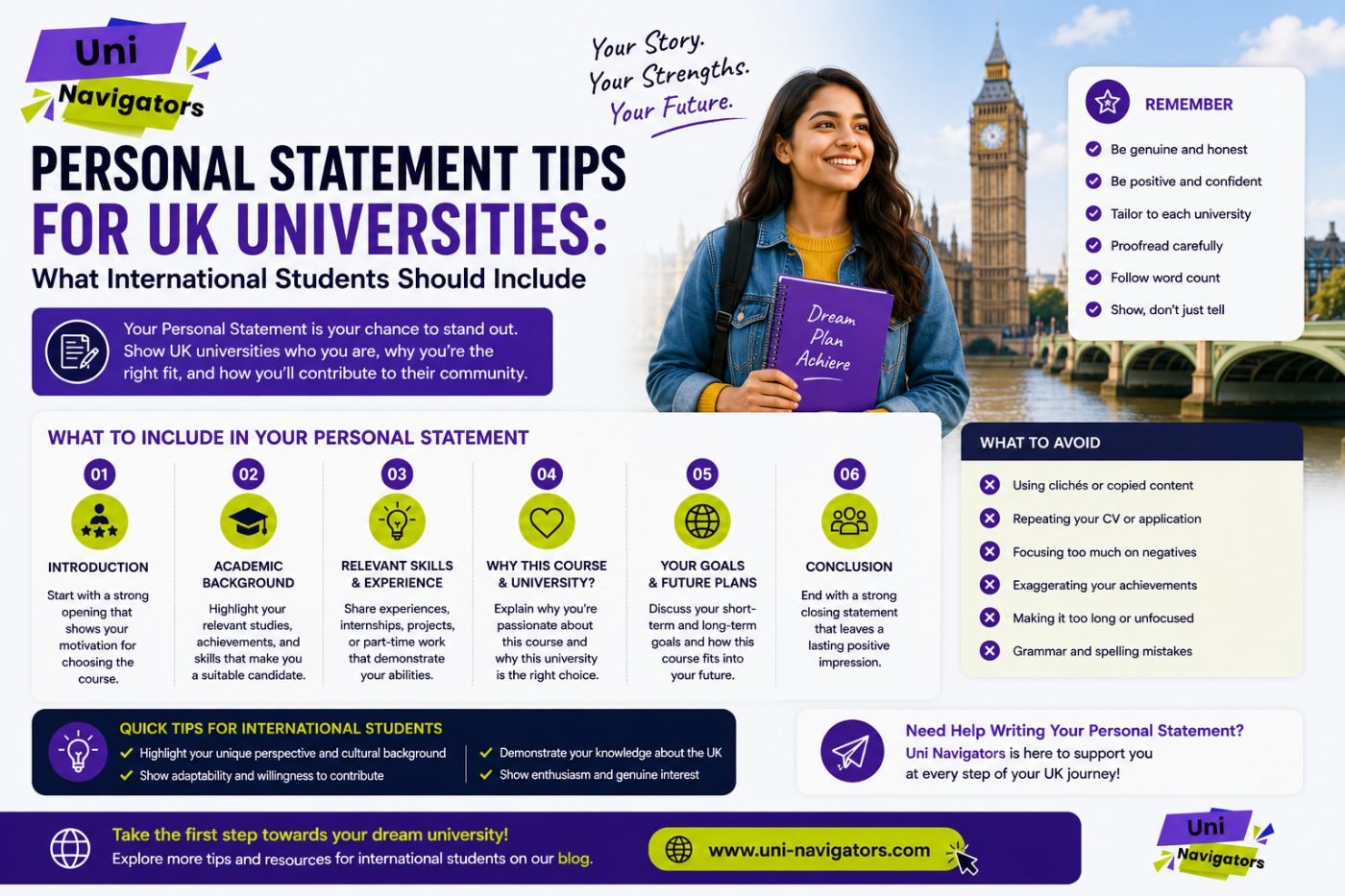
Suggested Personal Statement Structure
A clear structure can make your statement easier to read.
Introduction
Explain your interest in the subject and motivation for applying.
Academic Background
Discuss relevant qualifications, achievements, and subject knowledge.
Relevant Experience
Describe work experience, volunteering, projects, or practical learning.
Skills and Extracurricular Activities
Highlight transferable skills and personal development.
Career Goals and Conclusion
Explain future ambitions and why the course is the right next step.
Personal Statement Writing Tips
To create a strong application:
Be Authentic
Write in your own voice and avoid copying examples online.
Stay Focused
Keep content relevant to your chosen course.
Provide Evidence
Support claims with examples and experiences.
Show Reflection
Explain what you learned from your experiences.
Proofread Carefully
Review your statement multiple times before submission.
Example Questions to Help You Write
Consider the following questions:
- Why do I want to study this course?
- What inspired my interest in the subject?
- What relevant experiences do I have?
- What skills have I developed?
- What are my career goals?
- Why am I a strong candidate?
Your answers can help form the foundation of your personal statement.
How Long Should a Personal Statement Be?
Requirements vary depending on the application system and university.
As a general guide:
Undergraduate Applications
Personal statements should be concise, focused, and within application limits.
Postgraduate Applications
Universities may request longer statements or statements of purpose with specific requirements.
Always follow the university's official guidelines.
Common Reasons Personal Statements Are Rejected
Admissions teams may reject weak statements because they:
- Lack subject focus
- Include vague content
- Show little evidence of academic interest
- Contain plagiarism
- Fail to explain motivation
- Include numerous language errors
Careful preparation can help avoid these issues.
Final Thoughts
A personal statement is your opportunity to show universities who you are beyond grades and test scores. By demonstrating genuine interest in your chosen subject, highlighting relevant experiences, showcasing your skills, and explaining your future goals, you can create a compelling application that strengthens your chances of admission.
The most effective personal statements are authentic, well-structured, and focused on academic and professional aspirations.
At Uni Navigators, we help students worldwide secure admissions to leading universities in the UK, Europe, Canada, the USA, Australia, and other top study destinations. From university selection and personal statement guidance to student visas and pre-departure support, our experienced team assists students throughout every stage of their study abroad journey.
Start your UK university application journey today with Uni Navigators.