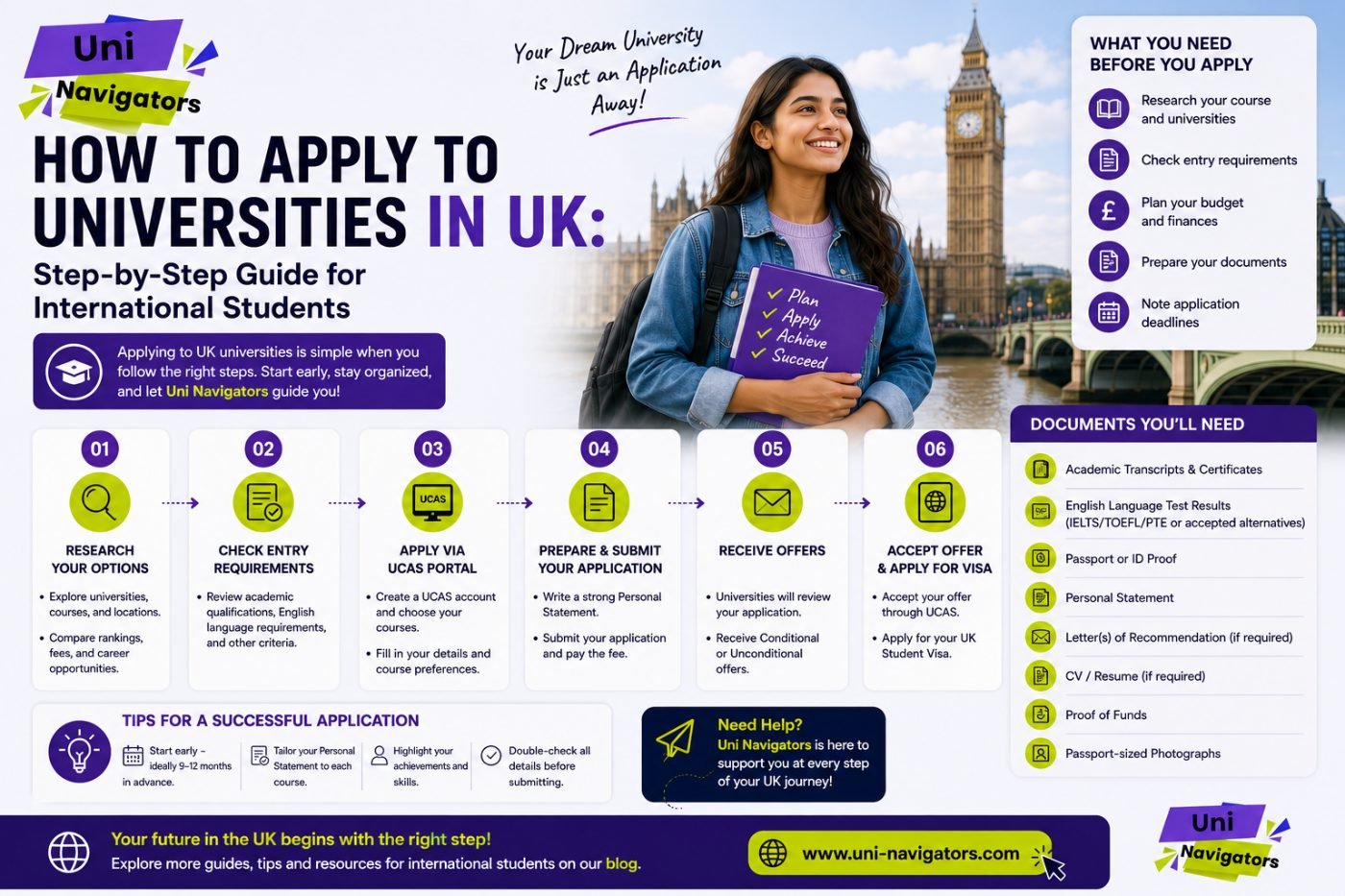
How to Apply to Universities in UK: Step-by-Step Guide for International Students
The United Kingdom remains one of the world's leading study destinations, attracting international students with its globally recognised universities, diverse course options, excellent research opportunities, and strong graduate employment prospects.
However, the university application process can feel overwhelming, particularly for students applying from overseas for the first time. Understanding each stage of the process can help you avoid mistakes, meet deadlines, and improve your chances of securing admission to your preferred university.
This comprehensive guide explains exactly how international students can apply to UK universities, from choosing a course to obtaining a student visa.
Why Study in the UK?
Before starting your application, it is worth understanding why the UK continues to be one of the most popular destinations for international education.
Benefits of studying in the UK include:
- Globally recognised qualifications
- High academic standards
- Shorter degree durations
- Diverse student communities
- Excellent research opportunities
- Strong graduate employment prospects
- Post-study work opportunities through the Graduate Route
These advantages make the UK an attractive destination for students from around the world.
Step 1: Choose Your Course and University
The first step is identifying the right course and university for your academic and career goals.
Consider factors such as:
- Course content
- University rankings
- Graduate employment rates
- Tuition fees
- Location
- Living costs
- Scholarship opportunities
Students should research multiple institutions before making a final decision.
Questions to Ask Yourself
Before applying, consider:
- What subject am I passionate about?
- What career do I want after graduation?
- What is my budget?
- Which city would I like to live in?
- Do I prefer a large or smaller university?
Answering these questions can help narrow your options.
Step 2: Check Entry Requirements
Every university and course has specific admission requirements.
These may include:
- Academic qualifications
- English language proficiency
- Subject-specific requirements
- Work experience (for some postgraduate courses)
- Portfolio submissions (for creative programmes)
Always review the latest requirements directly from the university before applying.
Academic Requirements
Typical qualifications include:
Undergraduate Courses
- High school qualifications
- A Levels
- International Baccalaureate
- Equivalent international qualifications
Postgraduate Courses
- Bachelor's degree
- Relevant academic background
- Professional experience (where applicable)
English Language Requirements
Most universities require proof of English proficiency.
Accepted qualifications may include:
- IELTS Academic
- PTE Academic
- TOEFL iBT
- Duolingo English Test
- Cambridge English Qualifications
Some universities may also accept alternative evidence of English language ability.
Step 3: Prepare Required Documents
Gathering your documents early can make the application process much smoother.
Commonly required documents include:
- Academic transcripts
- Degree certificates
- Passport copy
- English language test results
- Personal statement
- Recommendation letters
- Curriculum Vitae (CV)
- Portfolio (if applicable)
Ensure all documents are clear, accurate, and up to date.
Step 4: Write a Strong Personal Statement
Your personal statement is one of the most important parts of your application.
It allows universities to understand:
- Why you chose the course
- Your academic interests
- Career aspirations
- Relevant achievements
- Motivation for studying in the UK
A well-written personal statement can significantly strengthen your application.
What Makes a Strong Personal Statement?
Include:
- Genuine motivation
- Academic achievements
- Relevant experience
- Future goals
- Clear writing and structure
Avoid copying templates or submitting generic content.
Step 5: Submit Your Application
The application process depends on the level of study.
Undergraduate Applications
Most undergraduate applications are submitted through UCAS (Universities and Colleges Admissions Service).
Through UCAS, students can:
- Apply to multiple universities
- Track application progress
- Receive offers
- Accept university places
Students should carefully monitor application deadlines.
Postgraduate Applications
Most postgraduate programmes accept applications directly through university websites.
The process typically involves:
- Creating an online account
- Uploading documents
- Paying any application fees
- Tracking application progress
Each university may have different requirements and deadlines.
Step 6: Attend Interviews (If Required)
Certain courses require interviews before admission.
Common examples include:
- Medicine
- Dentistry
- Nursing
- Education
- Performing Arts
Interviews may be conducted:
- Online
- By video call
- In person
Preparation is important to demonstrate your suitability for the course.
Step 7: Receive University Offers
After reviewing your application, universities will issue one of the following decisions.
Conditional Offer
A conditional offer means you must still meet specific requirements.
Examples include:
- Achieving required exam results
- Completing English language tests
- Providing additional documents
Unconditional Offer
An unconditional offer confirms that you have met all requirements and have secured a place.
Students can proceed with the next stages of enrolment and visa preparation.
Step 8: Accept Your Offer
Once you receive offers from universities, you must decide which institution you wish to attend.
When making your decision, consider:
- Course quality
- Tuition fees
- Location
- Career prospects
- Accommodation options
- Scholarship availability
After accepting an offer, universities may request a tuition fee deposit.
Step 9: Receive Your CAS
After accepting your offer and meeting all conditions, the university will issue a Confirmation of Acceptance for Studies (CAS).
The CAS contains:
- University details
- Course information
- Tuition fee information
- Unique CAS reference number
The CAS is required for your Student Visa application.
Step 10: Apply for a UK Student Visa
International students must apply for a Student Visa before travelling to the UK.
Documents Usually Required
Students typically need:
- Valid passport
- CAS number
- Financial evidence
- English language evidence
- Tuberculosis (TB) certificate (if applicable)
- Visa application confirmation
Visa requirements may vary depending on nationality and circumstances.
Step 11: Arrange Accommodation
Accommodation should be secured as early as possible.
Popular options include:
University Halls
- Convenient
- Social
- Utilities often included
Private Student Accommodation
- Modern facilities
- Greater privacy
Shared Housing
- Often more affordable
- Suitable for continuing students
Research accommodation carefully before committing.
Step 12: Prepare for Travel
Before travelling to the UK, students should organise:
- Flight bookings
- Accommodation confirmation
- Travel insurance
- Financial arrangements
- Emergency contacts
Keep both digital and printed copies of important documents.
Step 13: Arrive and Complete University Enrolment
After arriving in the UK, students must complete university registration.
Common requirements include:
- Passport
- Visa documentation
- Academic certificates
- CAS details
Students may also need to:
- Open a UK bank account
- Register with a local doctor (GP)
- Obtain a student ID card
Common Mistakes to Avoid
Many international students experience delays because of avoidable errors.
Common mistakes include:
- Missing application deadlines
- Submitting incomplete documents
- Ignoring entry requirements
- Writing weak personal statements
- Applying too late for accommodation
- Delaying visa applications
Planning ahead can help avoid unnecessary complications.
Application Timeline for International Students
12–18 Months Before Intake
- Research universities
- Explore course options
10–12 Months Before Intake
- Prepare English language tests
- Gather academic documents
8–10 Months Before Intake
- Submit university applications
4–6 Months Before Intake
- Receive offers
- Accept university place
3–4 Months Before Intake
- Receive CAS
- Apply for Student Visa
1–2 Months Before Intake
- Arrange accommodation
- Book travel
Arrival
- Complete enrolment
- Begin your studies
Benefits of Applying Early
Students who apply early often benefit from:
- Greater course availability
- Better accommodation choices
- Scholarship opportunities
- Reduced visa stress
- More preparation time
Early planning can significantly improve the overall application experience.
Final Thoughts
Applying to universities in the UK is a straightforward process when approached step by step. By researching universities carefully, preparing documents early, meeting application deadlines, and understanding visa requirements, international students can maximise their chances of securing admission to their preferred institution.
The key to a successful application is preparation, organisation, and seeking professional guidance when needed.
At Uni Navigators, we help students worldwide secure admissions to leading universities in the UK, Europe, Canada, the USA, Australia, and other top study destinations. From university selection and application support to student visas, accommodation guidance, and pre-departure assistance, our experienced team supports students throughout every stage of their study abroad journey.
Start your UK university application journey today with Uni Navigators.