
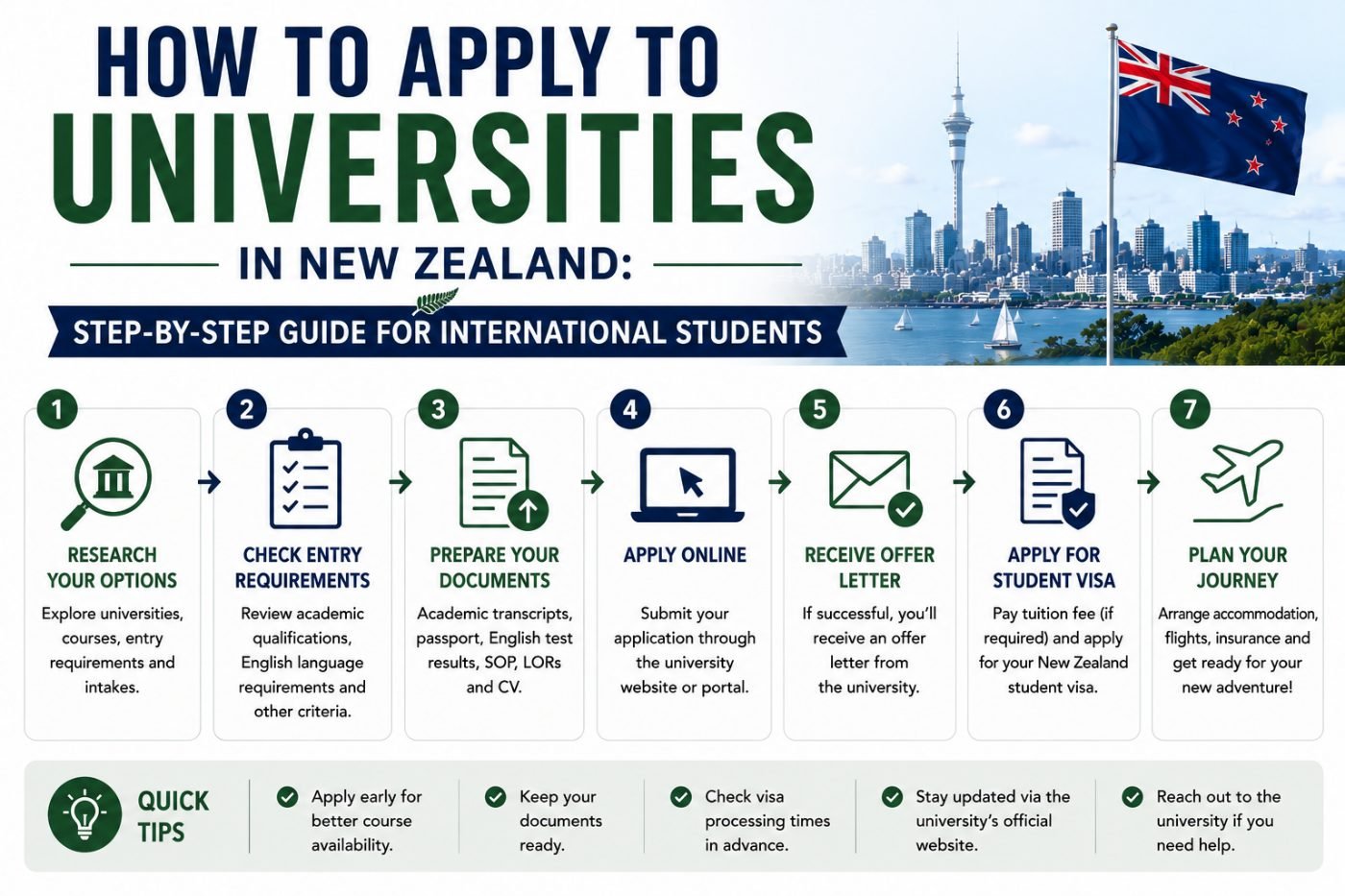
How to Apply to Universities in New Zealand: Step-by-Step Guide for International Students
New Zealand has become one of the world's most attractive destinations for international students. Known for its high-quality education system, globally recognised qualifications, safe environment, and excellent post-study work opportunities, the country welcomes thousands of students from around the globe every year.
However, before you can begin your academic journey, it is important to understand the university application process. While applying to universities in New Zealand is generally straightforward, careful preparation can significantly improve your chances of receiving an offer and securing your student visa on time.
This step-by-step guide explains everything international students need to know about applying to universities in New Zealand.
Why Study in New Zealand?
Before beginning your application, it's worth understanding why New Zealand continues to attract students from around the world.
Some of the key benefits include:
- Globally recognised universities
- High academic standards
- Safe and welcoming environment
- Multicultural communities
- Strong student support services
- Opportunities for part-time work
- Post-study work visa pathways
- Excellent quality of life
Whether you are interested in business, engineering, healthcare, information technology, agriculture, or creative arts, New Zealand offers programmes that meet international standards.
Step 1: Choose the Right Course and University
The first step is identifying the course and institution that best aligns with your academic interests and career goals.
When comparing universities, consider:
- Course content
- University rankings
- Tuition fees
- Entry requirements
- Scholarship opportunities
- Internship options
- Graduate employment outcomes
- Location and living costs
New Zealand is home to several highly respected universities offering undergraduate, postgraduate, and research programmes.
Popular study destinations include:
- Auckland
- Wellington
- Christchurch
- Hamilton
- Dunedin
- Palmerston North
Take time to research multiple options before making your final decision.
Step 2: Check Entry Requirements
Each university and programme has its own admission requirements.
Common academic requirements include:
Undergraduate Programmes
Students usually need:
- Completion of secondary education
- Equivalent qualifications to New Zealand university entrance standards
- Required subject prerequisites for specific courses
Postgraduate Programmes
Applicants generally need:
- A recognised bachelor's degree
- Relevant academic background
- Minimum GPA or percentage requirements
Competitive programmes may have additional entry criteria.
Step 3: Meet English Language Requirements
International students must demonstrate English language proficiency unless exempt.
Commonly accepted qualifications include:
- IELTS Academic
- PTE Academic
- TOEFL iBT
- Cambridge English Qualifications
- Duolingo English Test (accepted by some institutions)
Typical requirements vary depending on the level of study.
General Guidelines
| Study Level | IELTS Requirement |
|---|---|
| Diploma | 5.5 – 6.0 |
| Bachelor's Degree | 6.0 – 6.5 |
| Master's Degree | 6.5 – 7.0 |
Some universities may also accept alternative evidence of English proficiency, such as previous education completed in English.
Step 4: Gather Required Documents
Preparing your documents early can help avoid delays during the application process.
Most universities require:
Academic Documents
- Academic transcripts
- Certificates and diplomas
- Degree certificates (for postgraduate applicants)
Identification Documents
- Valid passport
- Passport-sized photographs (if required)
English Language Documents
- IELTS, PTE, TOEFL, or equivalent test results
Supporting Documents
- Statement of Purpose (SOP)
- Personal Statement
- Curriculum Vitae (CV) for postgraduate programmes
- Portfolio (for design, architecture, or creative courses)
- Letters of Recommendation
Always check programme-specific requirements before submitting your application.
Step 5: Prepare a Strong Statement of Purpose
A Statement of Purpose (SOP) is one of the most important components of your application.
Your SOP should explain:
- Academic background
- Career goals
- Reasons for choosing the course
- Reasons for selecting New Zealand
- Future plans after graduation
A well-written SOP helps admissions officers understand your motivation and suitability for the programme.
Tips for Writing a Strong SOP
- Be genuine and personal
- Explain your academic interests clearly
- Highlight relevant achievements
- Demonstrate career planning
- Avoid generic statements
Step 6: Submit Your Application
Most New Zealand universities allow students to apply online.
The application process generally involves:
- Creating an applicant account
- Completing the application form
- Uploading supporting documents
- Paying any required application fees
- Submitting the application
Always double-check information before final submission.
Step 7: Wait for the Admission Decision
After submitting your application, the university will review your documents.
Possible outcomes include:
Unconditional Offer
You have met all admission requirements and are eligible for direct entry.
Conditional Offer
Additional requirements must be fulfilled before final admission is granted.
Examples include:
- Completing current studies
- Meeting English language requirements
- Submitting outstanding documents
Processing times vary depending on the institution and programme.
Step 8: Accept Your Offer Letter
Once you receive an offer, carefully review:
- Tuition fees
- Programme details
- Start date
- Conditions of admission
To secure your place, you may need to:
- Sign and return the acceptance form
- Pay a tuition fee deposit
- Meet any outstanding conditions
The university will then issue the necessary documents required for your student visa application.
Step 9: Arrange Your Finances
Before applying for a student visa, you should prepare your financial documentation.
You may need evidence of:
- Tuition fee payments
- Living expenses
- Accommodation arrangements
- Sponsorship support (if applicable)
Financial planning is a critical part of the study abroad process.
Typical Costs to Consider
- Tuition fees
- Accommodation
- Food and groceries
- Transportation
- Health insurance
- Personal expenses
Creating a realistic budget can help avoid financial stress after arrival.
Step 10: Apply for a New Zealand Student Visa
After securing admission, the next step is obtaining a student visa.
Students typically need:
- Valid passport
- University offer letter
- Tuition fee payment evidence
- Financial documentation
- Medical certificates (if required)
- Police clearance certificates (where applicable)
- Health insurance arrangements
Visa requirements may vary depending on nationality and programme duration.
Students should apply as early as possible to allow sufficient processing time.
Step 11: Arrange Accommodation
Accommodation should ideally be secured before travelling.
Popular options include:
University Halls of Residence
- Convenient campus locations
- Strong student communities
- Utilities often included
Homestays
- Cultural immersion
- Family environment
- Meals often included
Shared Apartments
- Affordable
- Independent lifestyle
- Popular among returning students
Private Rentals
- Greater privacy
- Suitable for mature students
Research accommodation options early, especially before major intake periods.
Step 12: Prepare for Departure
As your travel date approaches, create a checklist to ensure a smooth transition.
Essential Pre-Departure Tasks
- Book flights
- Arrange airport transfers
- Confirm accommodation
- Organise travel insurance
- Prepare important documents
- Inform your bank
- Pack according to New Zealand weather conditions
Having a clear plan reduces stress and helps you settle in more quickly.
Common Mistakes to Avoid
Many international students face delays because of avoidable errors.
Missing Deadlines
Always submit applications well before closing dates.
Incomplete Documentation
Ensure all required documents are uploaded correctly.
Weak Personal Statements
Take time to prepare a thoughtful and personalised SOP.
Ignoring Visa Timelines
Student visa processing can take time, particularly during peak admission periods.
Poor Financial Planning
Budget carefully for both tuition and living expenses.
Scholarships for International Students
New Zealand universities and government organisations offer various scholarships to eligible international students.
Scholarships may be based on:
- Academic excellence
- Leadership potential
- Research achievements
- Country-specific agreements
Students should explore scholarship opportunities early as many have separate application deadlines.
How Uni Navigators Can Help
At Uni Navigators, we help students navigate every stage of the New Zealand university application process.
Our experienced advisors provide support with:
- University selection
- Course matching
- Application preparation
- Statement of Purpose guidance
- Scholarship applications
- Student visa assistance
- Accommodation planning
- Pre-departure support
We work with students worldwide to make studying abroad simpler, faster, and more successful.
Final Thoughts
Applying to universities in New Zealand is a straightforward process when approached with careful planning and preparation. From selecting the right programme and meeting admission requirements to securing a student visa and arranging accommodation, each step plays an important role in your study abroad journey.
By starting early, preparing strong application materials, and seeking professional guidance where needed, you can maximise your chances of gaining admission to a top New Zealand university and building a successful international future.
For students seeking world-class education, excellent career opportunities, and an outstanding quality of life, New Zealand remains one of the best study destinations in the world.